

Upbringing and Social Background:
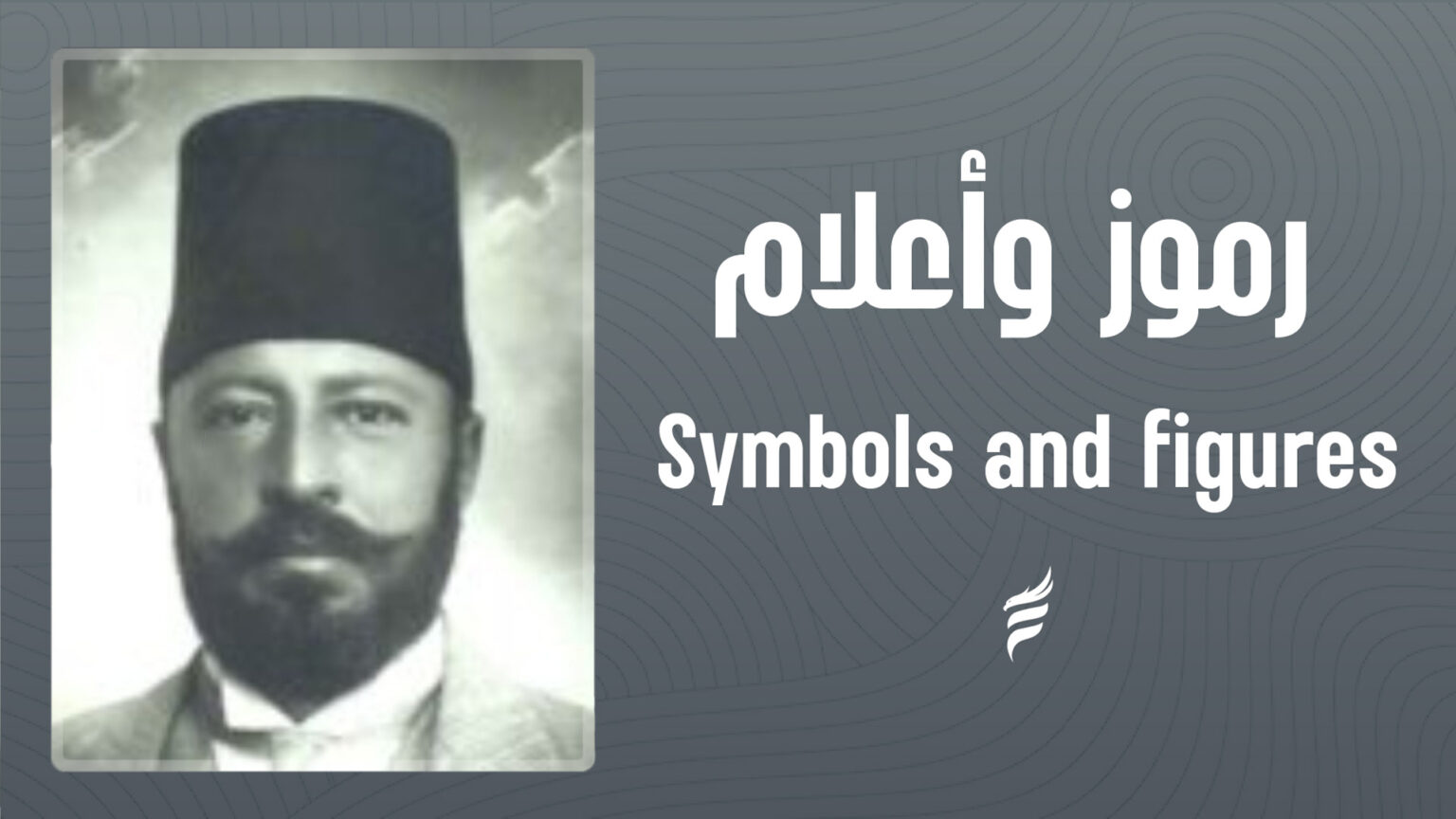
Abdel Rahman Pasha al-Yusuf was born in the Sarouja district of Damascus, outside the walls of the Old City, and belonged to a prominent Kurdish family that had moved from Diyarbakir to Damascus at the beginning of the 19th century.
His father, Muhammad Pasha al-Yusuf, was one of the most prominent figures in Damascus during the Ottoman era, and held high administrative and political positions in Homs, Acre, and Tripoli, providing his son with an influential political and social environment from a young age.
Abdel Rahman al-Yusuf inherited a considerable fortune from his maternal grandfather, the Kurdish notable Muhammad Saeed Shamdin Agha, which later formed the basis of his economic influence.
The Emirate of the Syrian Hajj and the Struggle for Influence:
In 1891, at the age of twenty, Abdel Rahman al-Yusuf was appointed Emir of the Syrian Hajj caravan, succeeding his father.
His appointment provoked objections from a number of Damascus notables due to his young age and limited experience, as this position was one of the highest religious and political offices in the Islamic world.
Among the most prominent objectors was Ahmed Izzet Pasha al-Abid, the private secretary of Sultan Abdul Hamid II, who sought to confine this position to the al-Abid family of Damascus. Sheikh Abu al-Huda al-Sayyadi, the Sultan’s advisor, intervened to resolve the dispute in favor of al-Yusuf, which led to a long-standing estrangement between the al-Yusuf and al-Abid families, only ended by the marriage of Zahra al-Yusuf, Abdel Rahman’s sister, to Muhammad Ali al-Abid.
Family Alliances and Consolidating Wealth:
Abdel Rahman al-Yusuf benefited from his father’s experience in expanding influence through marriage alliances. He married Fayza al-Azm, the daughter of Khalil Pasha al-Azm, who came from a prominent Damascene political family that had ruled the city in the 18th century, and several of whose members had held the position of Emir of the Hajj. This marriage contributed to doubling his wealth and strengthening his relations with the notables of Damascus, in addition to the vast agricultural lands he inherited from his father, which yielded him at least ten thousand gold coins annually.
Economic and Social Influence:
By the beginning of the 20th century, Abdul Rahman al-Yusuf owned the entire eastern shore of Lake Tiberias, three villages in the eastern Ghouta of Damascus, five villages in the Beqaa Valley, and twenty-four villages in the Golan Heights, making him one of the wealthiest Arab figures in the Ottoman Empire.
He was known for his great generosity towards his employees, granting them unprecedented salaries in Damascus at the time, in order to gain loyalty and social respect.
Political Role in the Ottoman Era:
Al-Yusuf played a prominent role in the Ottoman-German rapprochement and was one of the organizers of the reception of German Emperor Wilhelm II in Damascus in 1898, where the Emperor stayed as a guest in his palace in the Sarouja market.
He maintained his loyalty to Sultan Abdul Hamid II until the 1908 revolution, then allied himself with the Committee of Union and Progress, and was elected as a representative for the Syrian province in the Ottoman Parliament in 1909. He was re-elected in 1912 and 1914, and was also appointed a member of the Senate and the Central Committee of the Committee of Union and Progress, and head of its branch in Damascus.
His Stance on Arab Societies:
Abdul Rahman al-Yusuf opposed the Arab societies active before World War I, considering them unrepresentative of the Syrian people, and viewed the Young Arab Society as a tool in the hands of France and Britain.
He did not intervene to defend a number of Arab representatives who were later executed, including Abdul Hamid al-Zahrawi and Shafiq Mu’ayyad al-Azm. From the Ottoman State to the Faisalite Era:
After the fall of the Ottoman Empire, he refused to pledge allegiance to Prince Faisal bin Hussein, considering the Great Arab Revolt a betrayal of the Islamic Caliphate.
He hesitated to return to Damascus after the entry of the Arab armies in 1918, before finally returning under an official guarantee from Prince Faisal.
He re-entered political life after the abolition of the Hajj Emirate and participated in the founding of the Syrian National Party, popularly known as the Party of Notables.
The Syrian National Party and the Beginnings of Syrian Identity:
The party demanded the independence of Syria and the unity of its territories, the adoption of a constitutional monarchy, and equality among all components of the Syrian people without religious or ethnic discrimination.
It was noteworthy that Al-Yusuf, the former Ottoman Emir of Hajj, identified himself for the first time as a Syrian, not an Ottoman, in a significant political shift that reflected the formation of Syrian national identity.
The First Syrian Congress and Independence:
Abdul Rahman Al-Yusuf was elected as a representative of Damascus in the First Syrian Congress in 1919 and served as Vice-President of the Council.
He participated in declaring Syria’s independence on March 8, 1920, and pledging allegiance to Prince Faisal as King of the country, and rejected the partition and mandate projects.
His Stance on the Battle of Maysalun:
When the French army advanced towards Damascus, Al-Yusuf called for avoiding military confrontation, recognizing the imbalance of power and out of concern for the lives of the Syrians, a stance that reflected political pragmatism more than emotional fervor.
His Last Position and Assassination:
After the defeat at Maysalun, he was appointed President of the Consultative Council in the government of Ala al-Din al-Durubi. During an official mission to Hauran to negotiate French fines, Al-Youssef and the Prime Minister were killed at the Khirbet Ghazaleh train station on August 21, 1920, in a tragic incident that shook the country.
The Funeral and National Legacy:
His body was returned to Damascus a month later and was laid to rest in a state funeral at the Dahdah cemetery.
His family commemorated him by donating land for the construction of Ibn al-Nafis Hospital and erecting a marble plaque bearing his name.
His son, Muhammad Saeed Al-Youssef, became Governor of Damascus in 1949, while his brother, Hassan Sami Al-Youssef, became involved in politics.
Abdul Rahman Pasha Al-Youssef in Syrian Memory:
A special bust of Abdul Rahman Al-Youssef is displayed in the Azm Palace Museum, in the section dedicated to the Syrian Hajj caravan, commemorating his role in the history of the Syrian state.
The Position of the Syrian Future Movement:
We, in the Syrian Future Movement, as we remember the founding statesmen of Syria, recall one of the symbols of independence and a prominent figure of the first Syrian state, Deputy Abdul Rahman Pasha Al-Youssef, as part of a documentary series that aims to connect our revolutionary present with a solid national past, and to revive the need to cultivate statesmen who will protect the homeland, preserve its achievements, and restore the Syrian state’s glory and prestige after decades of tyranny and corruption.