Introduction:
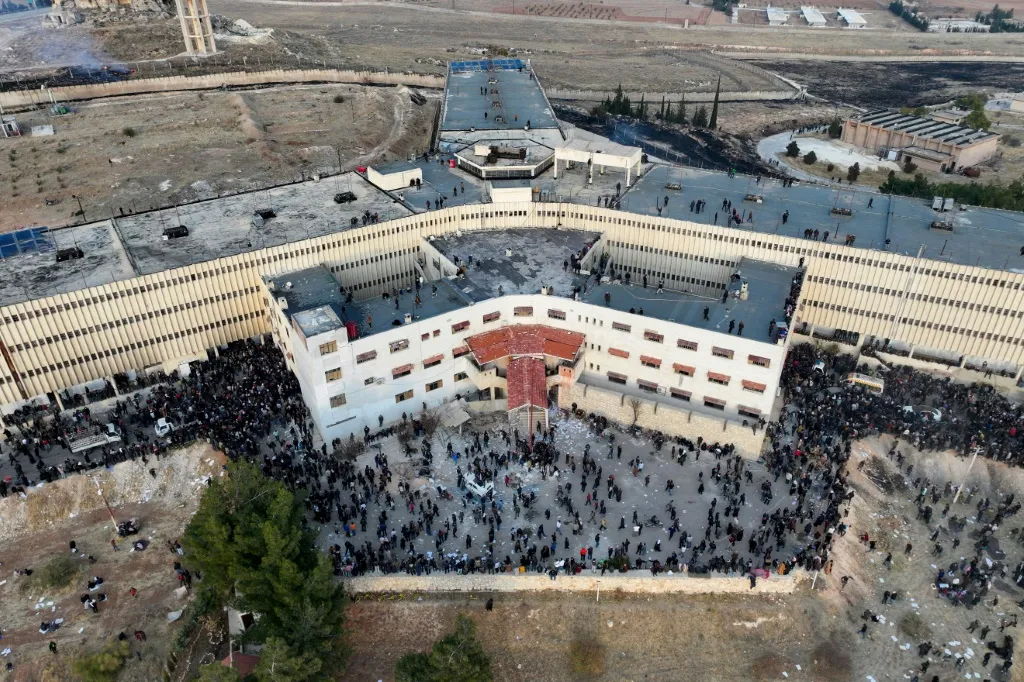
For decades under the rule of the Assad family, Syria’s prison system has been transformed into a central instrument of political repression and systematic human rights violations. Prisons have traditionally been divided into two main categories:
1- Prisons and detention centers run by the intelligence services (such as Saydnaya Military Prison, Branch 235, Branch 215, and the Air Force Intelligence branches), which were primarily used for political prisoners and dissidents and were characterized by systematic torture, extrajudicial killings, enforced disappearances, and deliberate starvation.
2- Traditional criminal prisons (such as Adra Prison), which suffered from severe overcrowding and inhumane conditions, but did not reach the same level of systematic brutality as the security prisons.
Reports by organizations such as Amnesty International (which described Saydnaya as a “human slaughterhouse”), the UN Commission of Inquiry on Syria, and the Syrian Network for Human Rights have documented thousands of cases of sexual torture, severe beatings, mass executions, and deaths due to medical neglect.
Following the fall of the regime in December 2024, thousands of detainees were released, and the transitional authorities announced the closure of some of the most prominent security prisons. However, recent reports (2025-2026) indicate the reopening of some facilities and the emergence of new violations such as beatings and extortion in some prisons, highlighting the urgent need for fundamental reform.
This paper, presented by the Syrian Future Movement, aims to propose a comprehensive vision for restructuring the prison system, based on:
- International standards (primarily the Nelson Mandela Rules).
- The experiences of countries that have undergone similar transitions (Tunisia after the Arab Spring, South Africa after apartheid, Chile and Argentina after military dictatorships).
- Advanced models (Norway and Germany as examples of a focus on rehabilitation).
The objective: To transform prisons from instruments of repression into corrective institutions that respect human dignity, reduce recidivism rates, and contribute to building a democratic, civil state. The Legal and
International Framework for Prison Reform:
Reform must be based on the United Nations Standard Minimum Rules for the Treatment of Prisoners (the Nelson Mandela Rules, adopted in 2015), which affirm:
- The inherent dignity of the human person must be respected and treated with respect for their inherent human rights (Article 1).
- Torture and cruel, inhuman, or degrading treatment must be prohibited (Article 4).
- Prisoners must be separated by sex, age, type of crime, and legal status (tried/convicted).
- Health care must be provided on an equal basis with that of the community (Articles 24-35).
- Prolonged solitary confinement (more than 15 days, Articles 43-44) must be prohibited.
- Rehabilitation, education, and work programs must be encouraged (Articles 91-104).
The Convention against Torture, the Optional Protocol to the Convention against Torture and Other Cruel, Inhuman or Degrading Treatment or Punishment (OPCAT), establishing an independent national preventive mechanism for prison visits, and the Bangkok Rules for the Treatment of Women Prisoners must also be adhered to. In the Syrian context, this requires repealing repressive legislation (such as previous emergency laws) and enacting a new prisons law that criminalizes torture and specifies penalties for those responsible for violations.
Lessons from the experiences of similar countries:
1- Tunisia after the revolution (2011-2024+):
Following the fall of Ben Ali, Tunisia underwent partial reforms: the establishment of the National Authority for the Prevention of Torture (2013), improvements to some conditions, and projects with the United Nations Office on Drugs and Crime (UNODC) for managing extremist prisoners (the “Tawasul” project).
However, overcrowding persisted (150-200% of capacity), and reforms were hampered by security priorities against terrorism, leading to a focus on security reinforcement rather than rehabilitation.
The lesson we can learn is: the necessity of reform being independent of security agendas, and avoiding the reproduction of overcrowding through harsh punitive laws (such as Law 52 on narcotics).
2-South Africa after Apartheid (1994+):
Mandela’s transition led to radical reforms, including the closure of political prisons, the consolidation of prisons under a single ministry, a focus on rehabilitation, and the establishment of independent visitation commissions.
Recidivism rates decreased thanks to education and vocational training programs.
The lesson here: the necessity of linking reform to a comprehensive transitional justice process (Truth and Reconciliation Commission).
3-Chile and Argentina after Military Dictatorships:
In Chile (after Pinochet), torture centers were closed, programs for victims of abuse were established, and prisons were gradually reformed towards a European model.
In Argentina, the trials of some former high-ranking officials led to legal reforms.
The lesson: the necessity of holding former officials accountable and involving victims in the reform process.
Advanced Models: Norway and Germany:
1-Norway (Rehabilitation Model):
The recidivism rate is approximately 20% (compared to 60-70% in penal states). Prisons are partially open, clean, and individual, with education and employment programs, in addition to a focus on social reintegration. Most importantly, the staff are psychologically trained.
The lesson we see is that investing in people (prisoners and staff) reduces crime in the long run.
2- Germany:
Focus on “Resozialisierung” (social reintegration), a clear separation between pretrial detention and prison sentences, psychological treatment programs, and independent judicial oversight. This experience offers valuable lessons regarding the independence of prison administration from security agencies.
A vision from the Syrian Future Movement for reorganizing prisons in Syria:
Administrative Structure:
- Establish a General Directorate of Prisons and Rehabilitation under the Ministry of Justice (not the Ministry of Interior or Security), with an independent oversight board comprising civil society organizations and former victims.
- Permanent closure of former security prisons (Saydnaya, intelligence branches), converting them into museums or documentation centers.
Classification and Separation:
- Complete separation: defendants/convicts, criminals/remnants of the old regime or terrorists, women/children, and mentally ill individuals.
- Minimize pretrial detention (alternatives: bail, electronic monitoring in the future).
Physical and Health Conditions:
- Building Rehabilitation: Clean, well-ventilated, heated, and well-lit individual or small prisons.
- Comprehensive Medical Care (Physical and Psychological).
Rehabilitation and Programs:
- Mandatory Education, Vocational Training, and Psychological Treatment Programs (especially for victims of domestic or sexual abuse)..
- Programs for extremist prisoners (drawing on Tunisia’s experience with UNODC).
Oversight and Transparency:
- Immediate accession to OPCAT and establishment of a national preventive mechanism.
- Regular visits by international and local human rights organizations.
- An independent complaints system, and here we support the website launched by the Ministry of Interior, “Your Voice Has Been Heard.”
Connected Transitional Justice:
- Holding former officials accountable for violations.
- Reparations for victims and their families.
Funding and International Support:
- Seeking support from the United Nations (UNODC, OHCHR), the European Union, and countries such as Norway and Germany for training and funding.
Conclusion:
It is clear from all of the above that prison reform is an essential part of building a state that respects the dignity of its citizens.
The bitter experience of Syrians with prisons under the Assad regime has made this reform a moral and political imperative. We believe that by adopting Mandela’s standards, drawing inspiration from the experiences of Tunisia and South Africa, and following the Norwegian model, prisons can be transformed into places of rehabilitation, not revenge. Therefore, the Syrian Future Movement calls for a broad national dialogue that includes victims, civil society, and international experts to ensure the implementation of this vision. Finally, success in this area will be measured by lower rates of recidivism and repeat offenses, as well as by respect for human dignity and the people’s trust in their new state.
the reviewer:
- Amnesty International. (2017). “Human slaughterhouse”: Mass hangings and extermination at Saydnaya Prison, Syria. Amnesty International Ltd.
https://www.amnesty.org/en/documents/mde24/5415/2017/en/ - First Step Alliance. (2022, January 3). Rehabilitation lessons from Norway’s prison system.
https://www.firststepalliance.org/post/norway-prison-system-lessons - United Nations. General Assembly. (2015). United Nations Standard Minimum Rules for the Treatment of Prisoners (the Nelson Mandela Rules) (Resolution A/RES/70/175).
https://undocs.org/A/RES/70/175 - United Nations Office on Drugs and Crime (UNODC). (n.d.). Tawassol Project: Preventing violent extremism in Tunisian prisons. Retrieved January 2026, from
https://www.unodc.org/unodc/justice-and-prison-reform/cpcj-prison-reform/tunisian-prisons