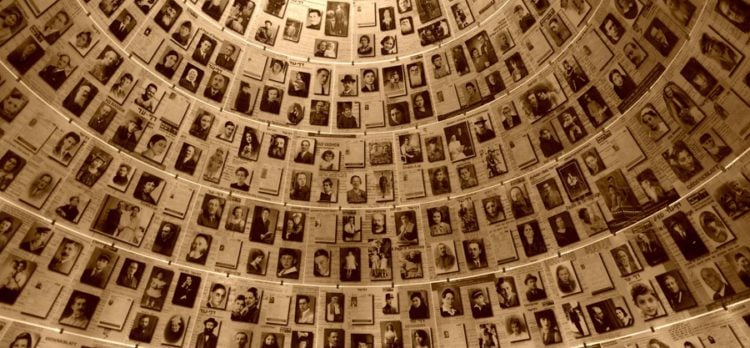
The Syrian Future Movement commemorates the International Holocaust Remembrance Day, which was adopted by the United Nations General Assembly in 2005 and coincides with the liberation of the Auschwitz-Birkenau concentration camp on January 27, 1945.
We express our deep and sincere sympathy with the victims of this horrific human tragedy, which claimed the lives of millions of innocent people, including six million Jews, along with other groups subjected to genocide and persecution under the Nazi regime.
We consider this commemoration a moral reminder of the necessity to confront injustice and hatred in all its forms, and that its lessons must serve as a guide for humanity to prevent the recurrence of such crimes against humanity.
In this context, we in the Syrian Future Movement regret to observe how historical victims can transform into perpetrators in other contexts, a documented psychological and political phenomenon known as “the victim becomes the victimizer” or “the oppressed becomes the oppressor.”
This concept, developed by psychologists such as Anna Freud in her theory of “identification with the aggressor,” and political thinkers such as Frantz Fanon in his book “The Wretched of the Earth,” describes how historical trauma can lead to a repetition of the cycle of violence, where the victim – out of fear or to consolidate power – replicates patterns of oppression against others. In the case of Israel under the leadership of the occupying entity’s war prime minister, Benjamin Netanyahu, we see a manifestation of this phenomenon. The policies of occupation and systematic violence against the Palestinian people, and later the Syrian people after the fall of Assad, have transformed into a form of modern-day genocide, exploiting the memory of the Holocaust to justify human rights violations and atrocities.
We believe that this transformation from “oppressed” to “oppressor” is not an inevitable fate, but rather the result of political choices that disregard the lessons of history and perpetuate a cycle of injustice that threatens peace in the region and the world.
The Syrian Future Movement, which stems from the values of the Syrian revolution—freedom, dignity, and justice—calls for an immediate end to all forms of genocide and injustice in the world, whether in Palestine, Syria, or anywhere else.
This day should be an opportunity to reflect on how to break the cycle of violence by promoting historical education, fostering dialogue between peoples, and supporting international initiatives to hold perpetrators accountable and restore dignity to the victims. We also call upon the international community, human rights organizations, and governments to work collectively to prevent the recurrence of injustice and to use the lessons of the Holocaust as a foundation for building a more peaceful and secure world where the human rights of all are respected without discrimination.
In the Syrian Future Movement, we are committed to building a new Syria—a unified state that recognizes its cultural and ethnic diversity—and to ensuring that the memory of the Holocaust serves as an inspiration for our domestic and foreign policies, making us a voice for justice and peace in the region and the world.
We believe that the true benefit of this day lies in rejecting all forms of hatred and extermination and promoting the values of tolerance and peaceful coexistence as the basis for a shared future.