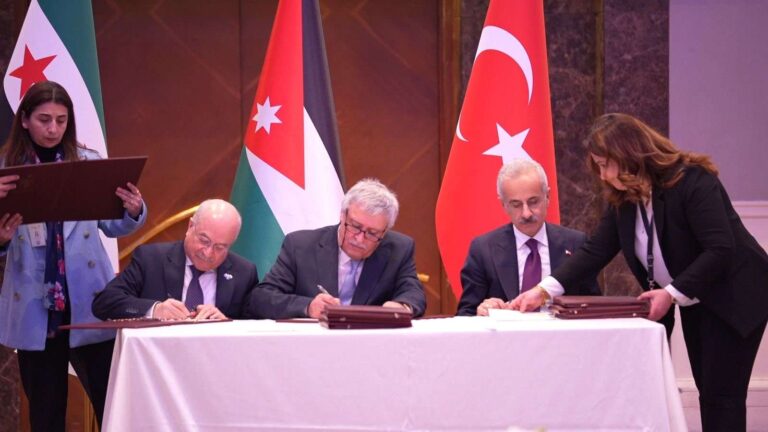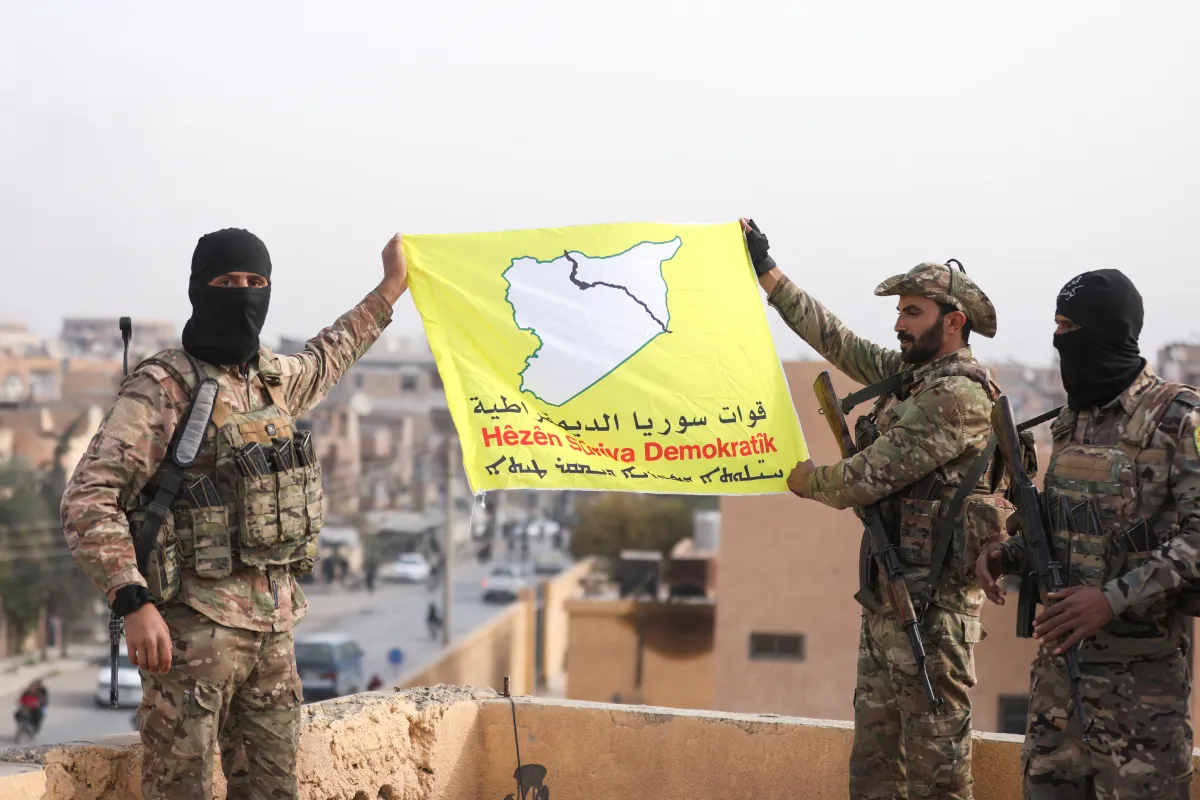
The Syrian Future Movement welcomes the historic agreement signed by President Ahmed al-Sharaa, President of the Syrian Arab Republic, with the Syrian Democratic Forces (SDF) on January 18, 2026. This agreement was officially announced by the Presidency and its details were published through official Syrian media outlets, relying on the Syrian government’s announcement and credible international media coverage confirming its validity without any fundamental contradictions.
The Syrian Future Movement considers this agreement a radical turning point in the course of the Syrian conflict. It goes beyond a mere ceasefire to the establishment of a comprehensive institutional framework for the reunification of the national territory. This framework draws inspiration from successful international experiences, such as the 2016 peace agreement in Colombia between the government and the Revolutionary Armed Forces of Colombia (FARC), which successfully integrated thousands of fighters into civilian life through rehabilitation and political participation programs, leading to a reduction in violence rates of over 90%, according to United Nations reports. Similarly, South Africa’s transition after the end of apartheid in 1994, where comprehensive negotiations between the government and the African National Congress (ANC) resulted in a constitution guaranteeing ethnic diversity and political participation, transforming the conflict into a model of national reconciliation, is another example.
The Syrian Future Movement highlights the intricate details of this agreement as evidence of its strategic depth. These details include a comprehensive and immediate ceasefire on all fronts; the withdrawal of SDF military formations to the east of the Euphrates River as a preliminary step towards national redeployment; the administrative and military handover of Deir ez-Zor and Raqqa governorates to the Syrian government, with the retention and protection of current employees; the integration of civilian institutions in Hasakah governorate into state structures; the government’s takeover of all border crossings and oil and gas fields to ensure the return of national resources to the people; the individual integration of SDF military and security personnel into the Ministries of Defense and Interior after thorough security vetting, with the granting of necessary ranks and benefits; the adoption of a list of SDF-nominated leaders for senior state positions to strengthen the partnership; the expulsion of non-Syrian PKK elements from across the border; cooperation in combating terrorism and managing ISIS prisons and camps; and welcoming Presidential Decree No. 13 of 2026, which recognizes Kurdish cultural and linguistic rights, addresses the issue of unregistered persons, restores property rights, and designates Nowruz as an official holiday. Agreements Reached on the Safe Return of Residents of Afrin and Sheikh Maqsoud
The Syrian Future Movement affirms that these provisions represent a profound political philosophy reflecting an awareness of the complexities of ethnic and regional conflicts. It draws upon the 1995 Dayton Agreement for Bosnia, which ended a bloody war through an administrative division that preserved national unity while recognizing ethnic particularities. This contributed to the region’s long-term stability despite initial challenges. This agreement can transform Syria’s diversity from a source of tension into a constructive force through integration mechanisms that ensure inclusivity and foster mutual trust after years of human losses exceeding half a million deaths, according to UN statistics.
The Syrian Future Movement calls upon all parties—the Syrian government, the Syrian Democratic Forces, and the international community, including the United States and the international coalition—to implement all provisions of the agreement immediately, fully, and honestly. It also calls for the formation of joint international monitoring committees to oversee the withdrawal and integration process, drawing inspiration from the success of the Truth and Reconciliation Commission in South Africa, which helped heal social wounds. This will ensure transparency and prevent any selective interpretation that could reignite the conflict.
The Syrian Future Movement demands binding international guarantees to prevent any return to escalation, stressing that any violation will lead to a new humanitarian catastrophe. It calls for transforming the agreement into a constitutional foundation through a comprehensive national dialogue that includes all components of Syrian society, drawing on Colombia’s experience in redistributing land and resources to reduce the economic disparities that fuel conflict.
The Syrian Future Movement declares its commitment to supporting the end of all forms of conflict in Syria by promoting coexistence and facilitating the safe return of refugees and internally displaced persons—whose numbers exceed 13 million according to UNICEF reports—along with economic reconstruction focused on the equitable distribution of natural resources, inspired by the internationally supported reconstruction model in Bosnia.
The Syrian Future Movement warns against foreign interference that could obstruct the agreement and calls for support for the implementation of UN Security Council Resolution 2254 (2015), which calls for a smooth political transition leading to free elections, emphasizing the constructive role of the sponsoring states.
The Syrian Future Movement firmly believes that true peace requires intellectual depth that goes beyond superficial agreements, and expresses its optimism that this step will be the beginning of a unified and strong Syria.