
The Reality of Marginalization and the Destructive System
Through my study and analysis of the reality in the Middle East, and especially the Arab world, I have not learned any new lessons from this destructive Arab reality. Rather, I have become even more convinced that the human being in our countries, starting with Syria—which has become a bloody laboratory where every form of barbarity is tested, whether in the name of religion, Arabism, the state, or even revolution—has no value: not as an independent being, not as a citizen, not even as a victim. He is merely a tool: a tool for the authorities to prove themselves, a tool for rhetoric to promote its illusions, and a tool for others to exploit in his name.
This marginalization is not accidental; it is a comprehensive system based on the complete annihilation of the human being, not only his freedom, but his very existence as a being capable of thought, of choice, of being the cause of his own destiny. Therefore, we cannot simply be content with anger or sorrow. We must ask: How do we reconstruct the Arab individual? Not as a top-down reform project, but as a rebirth from within, from the depths, from the womb of suffering itself. The Crisis of the Arab Self: The Root of the Problem
The truth is that the root of every crisis in Middle Eastern societies, including Arab societies, lies not only in politics, nor in economics, but in a crisis of the self. We have not, in reality, produced a free self, but rather a subjugated one: subjugated to patriarchal authority, to authoritarian religious discourse, to tribal or sectarian identity, to what others promote, and to a state that has become an enemy of its own people.
In this context, the Arab individual was not born master of himself, but rather found himself in a web of unequal relationships: the father dominating the son, the man the woman, the sect or clan the individual, the party the citizen, and the state the whole. The truth is that all these relationships are not natural, but rather the historical product of an authoritarian project called “authoritarian modernity”: modern in form, with its institutions, uniform dress, and rhetoric, but which, at its core, reproduces barbarity in the name of progress.
Let’s look at Syria under the Ba’ath Party: While it sang the praises of Arab nationalism, unity, freedom, and socialism, it was simultaneously building prisons, setting records in torture and murder, and turning cities into arenas of destruction and brutality. The state here was not a means of protecting humanity, but rather an instrument of enslavement. And the Arab liberationist and socialist rhetoric was nothing but a mask for a deeply entrenched authoritarian project.
The Ideal Alternative: The Project of Democratic Modernity
Therefore, the ideal alternative is the project of “democratic modernity.” This is not merely a political system, but a new way of life, based on three fundamental pillars: women, nature, and participatory democracy.
Women as a Measure of Liberation
Why women? Because the liberation of women is the measure of the liberation of the entire society. In a society where women are imprisoned, enslaved, and denied education, no free human being can be born. Freedom is a reality that cannot be built on only half of society.
Nature as an Extension of Human Relations
And what about nature? Because the exploitative relationship with nature—logging and forest fires, river pollution, turning land into a real estate market—is an extension of the exploitative relationship with humanity. Those who do not respect the land do not respect humanity.
Participatory Democracy as a Guarantee of Freedom
But what about participatory democracy? Because centralized power, whether in the name of God, Arabism, a party, or even a revolution, creates nothing but servitude. Power that emanates from the grassroots, from neighborhood councils, cooperatives, and the people’s ability to manage their own affairs, is the only power capable of producing a conscious, responsible, and free individual.
The Desired Arab: From Dependence to Activism
The true Arab we aspire to is not the one who merely chants slogans, but the one who first questions himself. He cannot liberate others while he remains enslaved within himself. He cannot build a democratic state while he still sees the other as an enemy. He cannot call for freedom while he still shackles his wife or daughter.
True change doesn’t begin with a street demonstration, but with a conversation at home. It doesn’t begin with the fall of a regime, but with the fall of fear from the heart. It doesn’t begin with liberating the land, but with liberating the mind. This is what makes the project of democratic modernity an existential revolution before it is a political one, because it calls upon us to reread our history not as a series of defeats, but as lost opportunities to rebuild our collective identity.
Arab History: From a Narrative of Defeats to a Narrative of Resistance
Arab history is not only a history of wars and divisions, but also a history of resistance: the resistance of women in Quraysh, the resistance of the Mu’tazilites against authoritarian religious discourse, the resistance of peasants against feudal lords, and the resistance of intellectuals against despotism. All of these are sparks that can reignite the flame.
For centuries, we have taught our children to obey, not to think; to repeat, not to innovate; to fear, not to unite. And when some of them revolted, we transformed the revolution itself into a new form of authority, because we did not change the human being within us.
The Current Reality: From Collapse to Reconstruction
Today, after we have all been crushed in Syria, Iraq, Lebanon, Yemen, Sudan, Libya, and Palestine, we have no choice but to return to our roots. Not the roots of the mythical past we glorify, but the roots of human potential: the potential to be different, to live together without slaughtering one another, to build without destroying.
This is the real challenge: not changing the ruler, but changing the relationship between people. Not building a state, but building a cohesive society whose members share in managing their affairs. Not demanding rights, but fulfilling our duties toward ourselves and others.
Learning from Pain, Not Illusions
So, when I say “I haven’t learned,” I mean I haven’t learned from illusions. I haven’t learned from the rhetoric of renaissance, Arabism, freedom, and socialism, which were in reality masks for tyranny. I haven’t learned from nationalism, which turned humanity into fuel for wars. I haven’t learned from religion, which was used as a tool of power, not as a source of mercy.
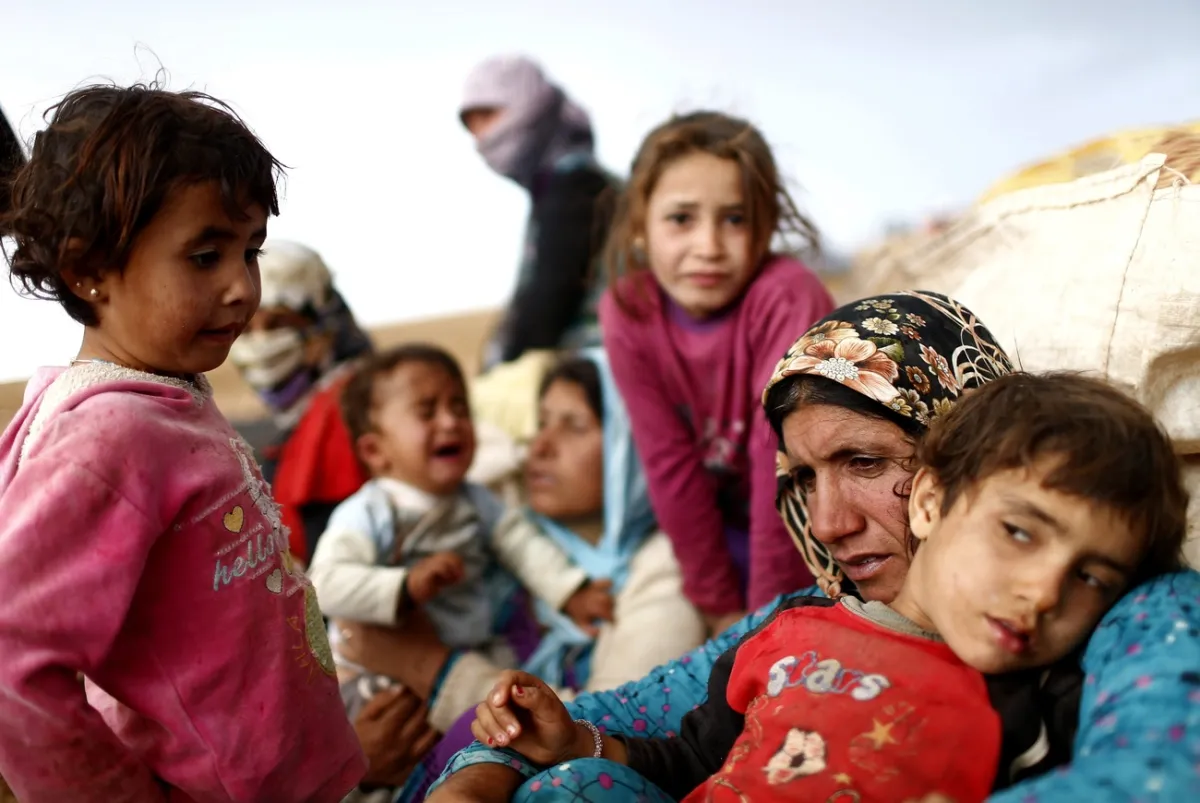
But I have learned from pain. From the anguish of a mother who has lost her son. From the child begging in the street after his home was bombed. From the young man who dreams of emigrating because he no longer sees himself as a human being in his own country. And from this painful school, I see that the only possible liberation is to reinvent the Arab individual: not as a consumer of rhetoric, but as a producer of his own existence. Not as a follower, but as an initiator. Not as an isolated individual, but as a conscious collective self.
The Path to Inner Liberation
And this is precisely what we want. It is not a ready-made answer, but a path of questioning. A path that doesn’t end with power, but begins with it. This path doesn’t teach us how to overthrow a ruler, but how to rebuild ourselves as free people.
Indeed, this path may be long, and it may seem impossible in times of collapse. But it is the only sustainable path, one that doesn’t reproduce the catastrophe. Because a free person, from birth, refuses to be humiliated. Nor does he accept humiliating others.
And this is the true hope: not in changing others, but in changing ourselves. Because change, ultimately, doesn’t come from the outside. It comes from within. From the heart. From thought. From will. From the certainty that humanity has value. A value that cannot be bought or sold. A value built day by day, in every small act where we choose freedom over fear, awareness over ignorance, and love over hate.