Introduction:
On November 10, 2025, the Veterinary Syndicate in Latakia Governorate issued a statement demanding fair treatment for veterinary sector workers and an increase in compensation. The syndicate argued that the current compensation (3% of salary) does not reflect the level of occupational risks faced by veterinarians and technicians while performing their duties. The syndicate comprises approximately 218 veterinarians, about 90% of whom work in government institutions, with their work distributed across various animal sectors: cattle, poultry, sheep, pharmaceuticals, and pets.
These demands are particularly important in the transitional phase following the fall of the Assad regime and the assumption of power by President Ahmed al-Sharaa. Rebuilding institutions necessitates a reassessment of the employment rights of personnel in vital sectors to ensure the continuity of essential services and enhance food security and public health.
- The Historical and Political Context of the Veterinary Sector in Syria:For decades, the veterinary sector in Syria has played a fundamental role in supporting national food security and regulating animal health. However, the long years of conflict have led to weakened infrastructure, the emigration of skilled professionals, and a decline in compensation and benefits for workers in the sector.Following the fall of the regime, Syria is undergoing a transitional phase that necessitates restructuring government institutions to ensure professional fairness and incentivize personnel to remain in public service.The statement issued by the Veterinary Syndicate in this context serves as an indicator of institutional civil pressure to reconsider compensation and incentive policies.
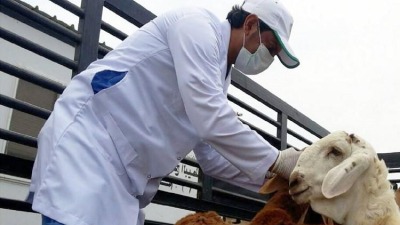
- The Importance of the Veterinary Sector and its Impact on National Development:Reports indicate that the livestock sector contributes more than 30% of Syria’s agricultural output, making veterinarians essential to safeguarding food security. Their duties include monitoring livestock health, treating animal diseases, and overseeing veterinary medicines and preventative vaccinations.
In this context, current employee compensation (3% of salary) does not reflect the occupational risks associated with the transmission of diseases from animals to humans, exposure to parasites, or working in hazardous agricultural environments. Improving compensation is not a luxury but a strategic necessity to ensure quality professional performance, workforce stability, and the sustainability of livestock production in Syria, especially given the challenges of economic and agricultural reconstruction.
- Semantic Analysis of the Union Statement:
The union statement can be interpreted through several dimensions:
- The Civil and Institutional Dimension: The demand for financial equity reflects the union’s awareness of the importance of integrating workers in vital sectors as partners in the process of rebuilding the new state.
- The Economic Dimension: Improving compensation contributes to strengthening the sector’s stability, reducing the brain drain, and stimulating professional performance related to agricultural production.
- The Social and Health Dimension: The veterinary sector is directly linked to public health and food security; therefore, investing in improving the conditions of its workers is an investment in the health of society.
- Comparison with International Experiences:
The experiences of Lebanon after the civil war and Kosovo after the conflict in the 1990s indicate that recognizing the rights of workers in vital sectors is a fundamental factor for state stability and institution rebuilding. Improving compensation motivates skilled individuals to remain in public service, and the existence of fair mechanisms for assessing risks and rewards strengthens the sense of citizenship and institutional belonging. Furthermore, linking compensation to performance or occupational risks reflects a fair and transparent practice, which contributes to strengthening institutional legitimacy.
- Recommendations and Future Policies:
Based on this analysis, several policies can be proposed to support veterinarians and enhance the sustainability of this vital sector:
- Conduct a comprehensive field survey to determine the distribution of veterinarians, their working conditions, and occupational hazards.
- Establish a mechanism for assessing occupational risks for each job specialty and link compensation to these risks.
- Develop ongoing training programs to equip personnel to face emerging risks and health challenges.
- Link compensation to outputs and performance to ensure the efficient use of resources.
- Integrate these policies within a national vision for rebuilding the state, recognizing employees in vital sectors as partners in development and stability.
Conclusion:
The Latakia Veterinarians Syndicate’s demand for increased compensation is a crucial indicator of the evolving relationship between the new state and its employees in vital sectors.
It represents an investment in the sector’s stability, food security, and public health.
The Syrian Future Movement emphasizes that recognizing workers’ rights and providing a fair professional environment is an essential part of rebuilding state institutions on the foundations of justice, citizenship, and competence.
References:
- Syria.tv. (November 10, 2025). The Latakia Veterinary Syndicate calls for fair treatment of workers and increased compensation. Link to the news article.
- Enab Baladi. (2025). The Animal Sector and Food Security in Syria.
- World Bank. (2021). Higher Education and Public Services in Post-Conflict Societies.
- UNESCO. (2022). Rebuilding Public Services after Conflict.
- FAO. (2020). Veterinary Services and Food Security in the Middle East.