Introduction:
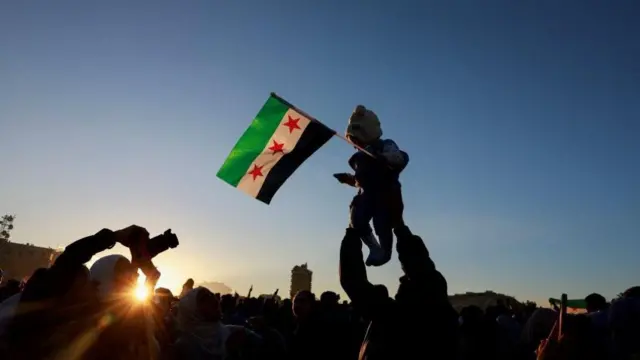
December 8th marks the first anniversary of the victory of the Syrian revolution and the fall of the Assad regime, after fourteen years of continuous national struggle during which Syrians made immense sacrifices for freedom, dignity, and the building of a new state.
While this day represents a pivotal historical milestone worthy of pride, it should not be treated as a mere occasion for the extravagant celebrations being planned in various provinces and public squares, as if we were witnessing a state that has fulfilled all its obligations to its citizens and overcome the pain and anguish of war.
The Syrian Future Movement, which has followed every stage and event of the Syrian revolution since its inception, believes that true celebration lies not in platforms, lights, and lavish spending, but in achieving justice, restoring rights, and enabling the Syrian people to return to the dignified life they yearn for and aspire to.
Therefore, we clearly declare our opposition to the excessive preparations being made by some government institutions to commemorate the first anniversary, and we explain the following reasons:
First: It is unacceptable to celebrate while displacement camps still exist:
How can millions of liras and resources be allocated to celebrations while thousands of Syrian families still live in tents lacking basic necessities?
While the exhausted Syrian still shelters under a piece of cloth against the winter, state resources will be spent on ostentatious displays that neither feed a hungry child nor return a displaced person to their home.
Second: Transitional justice has not yet been implemented:
The victory of the people is incomplete without justice for its victims! Despite the fall of the Assad regime, the files of violations have not yet been properly opened, the victims have not received the compensation they and their families deserve, private and public rights cases remain without clear accountability, and the process of truth-telling and national reconciliation, which is essential to ensuring that the tragedy is not repeated, has not yet begun. In light of this reality, the official celebration becomes merely a leap over the wounds, and an attempt to polish the image of incomplete stability.
Third: The fate of thousands of detainees remains unknown:
The new Syria cannot truly rejoice while thousands of families await news of their sons who disappeared in the regime’s prisons or on the battlefields!
The state cannot raise the banners of celebration before uncovering the prisons and detention centers, the mass graves that have not been opened or acknowledged, and the unresolved cases of the missing.
These issues are not secondary; they are the very essence of victory and a moral compass for the new state.
Fourth: The Syrian citizen remains unable to secure the basic necessities of life:
It is unacceptable to allocate budgets for decorations and celebrations while the prices of basic goods burden families, rents are beyond the means of most citizens, electricity, water, and internet bills weigh heavily on people, public services are severely inadequate, and salaries do not guarantee a minimum standard of living.
There is absolutely no point in a state celebrating when it has not yet fulfilled its social obligations towards its citizens.
Fifth: The issue of minorities remains unresolved, and Syrian unity is incomplete:
Before any celebrations, the state must seriously address the concerns of some minorities, particularly in Suwaida, reclaim lands outside state sovereignty, strengthen national integration based on equal rights, and reassure all communities without exception.
National unity is not built on celebrations, but on just policies that make every Syrian feel an integral part of this beloved homeland.
Sixth: National priorities take precedence over extravagant displays:
At this stage, state institutions must realize that rebuilding institutions is more important than staging spectacles, supporting the judiciary, oversight, and integrity is more important than constructing platforms, reforming the security and service sectors is more important than decorating the streets, and addressing unemployment and poverty is more honorable than holding parades.
Any celebration devoid of genuine reform is a deception of public awareness and an attempt to buy temporary approval.
Seventh: The Position of the Syrian Future Movement:
- We congratulate the Syrian people on their glorious victory. This is a great day and a historic turning point.
Undoubtedly, we rejoice and take pride in it, and we value the sacrifices made by our great people. - We support commemorating the anniversary through simple, symbolic events, and we endorse all modest, sincere celebrations that reflect the essence of the revolution and its humanitarian spirit, without any financial burden on the state budget and without extravagance.
- We boycott lavish official celebrations because they do not represent the suffering of the Syrian people, do not reflect the priorities of this stage, and are inconsistent with the revolution’s values of justice, freedom, and dignity.
- We call for the development of a national plan to address outstanding issues before any celebrations, including the return of displaced persons, opening the files of detainees and missing persons, uncovering mass graves, initiating transitional justice, supporting the most vulnerable groups, strengthening national unity, protecting the rights of minorities, and controlling public spending and directing it towards basic needs.
Conclusion:
Victory is a responsibility before it is an occasion:
The Syrian revolution did not triumph to fill the squares with festivals, but to fill the homes of Syrians with security, justice, and a dignified life.
A state that celebrates before it heals the wounds of its people is celebrating itself, not its country.
We in the Syrian Future Movement affirm that dignity cannot be embellished, justice cannot be postponed, and victory is not complete until the rights of the people are restored and a state of law is built.
Therefore, the true celebration begins the day the last tent is returned to a home, the fate of the last detainee is known, the last grave is opened, and the last citizen feels that he is living in the new Syria that the martyrs of honor and sovereignty dreamed of.