
Introduction:
The Syrian Interior Ministry’s announcement of the dismantling of several ISIS cells in various parts of the country[1] represents a significant development in the security and political trajectory of the Syrian transitional government. This coincides with growing reports of a French call for Syria to officially join the international coalition against the organization, a move that could open a new chapter in relations between Damascus and Western capitals and redefine Syria’s position within the regional and international security framework.
Background:
In an official statement, the Syrian Interior Ministry announced that it had succeeded in “dismantling several terrorist cells affiliated with ISIS that were active in the rural areas of Homs, Deir ez-Zor, and the Damascus countryside,” emphasizing the continuation of the security campaign until the complete elimination of these groups.
This announcement comes after months of intensive field efforts within a new national strategy based on centralizing security decision-making and unifying military efforts between the army and national security forces. This aligns with the transitional government’s vision of building security institutions under civilian authority, while simultaneously pursuing international partnerships in the fight against terrorism.
The International Coalition and France’s Role:
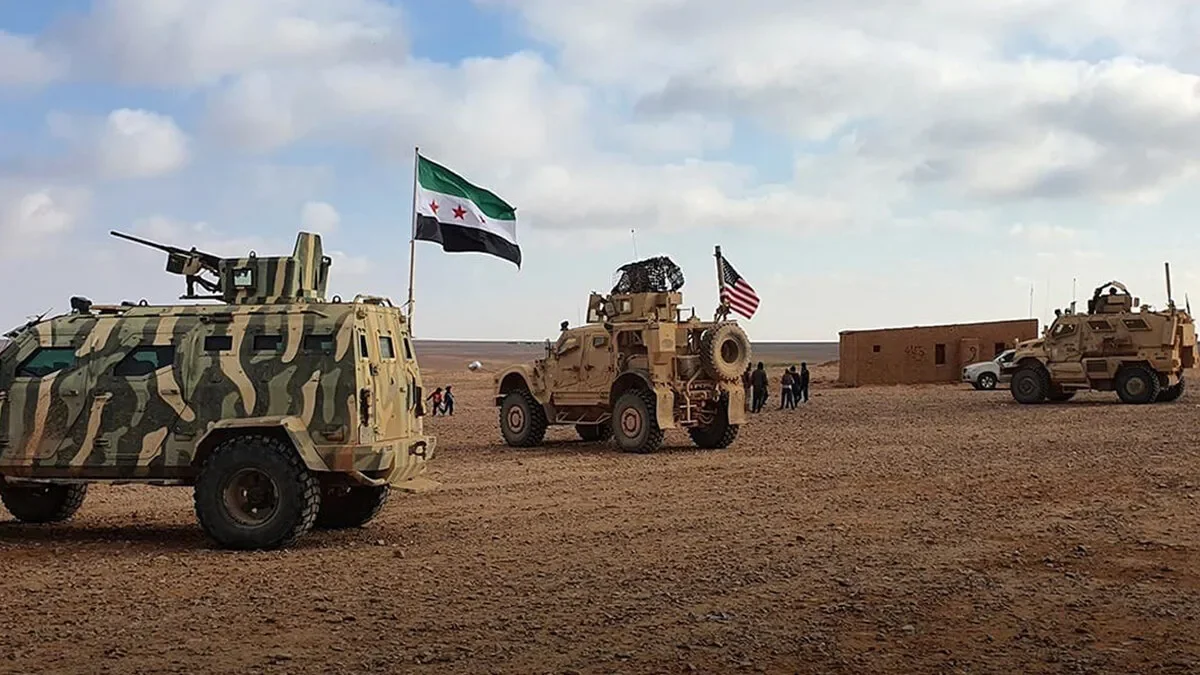
The international coalition against ISIS was established in 2014 under US leadership and includes more than eighty countries.[2] France is among the most prominent European countries supporting the continuation of the coalition within an international legal framework, and has recently called for the inclusion of the new Syrian government, as it is the only legitimate entity with the sovereign capacity to manage operations within its territory.
The French call is part of a new European approach toward Syria, which seeks to reintegrate it into the international system in a way that ensures stability and combats terrorism, especially given the declining role of the Syrian Democratic Forces (SDF) and their loss of political legitimacy following the March agreement.
Political Implications of Syria Joining the Coalition:
This development, if it occurs, carries several important implications:
- Restoring Sovereignty: Syria’s official accession to the coalition would signify de facto international recognition of its legitimate authority and transfer the counterterrorism file from the hands of local forces (the SDF) to the central government.
- Rebuilding Trust with the West: The French invitation represents an indication of a European desire for positive engagement with the new Damascus, which could later pave the way for broader economic and security partnerships.
- Balance of Internal Deterrence: Joining the international coalition would provide the Syrian state with advanced leverage over local forces opposed to the March agreement, by delegitimizing any claim to an “independent security role” outside state control.
Strategic Dimensions and Repercussions for the March Agreement:
For years, the Syrian Democratic Forces (SDF) have served as the local arm of the international coalition, enabling them to maintain the “fight against ISIS” card as a key bargaining chip.
However, Damascus’s official participation in the coalition would lead to the withdrawal of this card and the redirection of international support to official military institutions.
The Syrian state can then use this shift to pressure the SDF to adhere to the March agreement, which stipulates the integration of local forces into the national defense structure and the transfer of oil resources and border crossings to state control.
The March agreement also represents the most important political framework for establishing moderate administrative decentralization and guaranteeing cultural and ethnic rights in the northeast.
Syria’s joining the international coalition will enhance the government’s ability to implement the agreement’s provisions by securing security and technical support to combat terrorism and rehabilitate areas previously outside state control.
It will also contribute to reducing the unilateral American role in the region and redefining the international presence within the framework of cooperation with the legitimate Syrian state.
Future Scenarios:
Three main paths can be envisioned:
- Full integration into the international coalition: This would lead to broad Western support for the transitional government and strengthen its security capabilities.
- A limited, conditional partnership: Cooperation would be limited to information sharing and symbolic participation in air operations.
- A broad regional alliance: This would unite Syria, Iraq, Jordan, and Turkey in a common front against terrorism, and is the scenario most consistent with Syria’s long-term national security interests.
Conclusion :
Syria’s joining the international coalition against ISIS constitutes a strategic shift that reshapes the internal and regional balance of power.
It solidifies international recognition of the new legitimate authority, removes security pretexts from separatist forces, and paves the way for implementing the March agreement as a gateway to a comprehensive and sustainable settlement.
Thus, through this path, the Syrian state seeks not only to combat terrorism but also to reassert its monopoly on security and sovereignty over its entire national territory.
the reviewer:
- Syrian Ministry of Interior, “Statement on Dismantling ISIS Cells,” Syria TV website, November 7, 2025.
- U.S. Department of State, Global Coalition to Defeat ISIS, official website, updated 2024.
- Collombier, V. (2023). France’s Strategy in the Middle East after the Syrian Conflict. European Council on Foreign Relations.
- Lund, A. (2022). Local Security Orders in Post-War Syria: Between the State and Non-State Actors. Carnegie Middle East Center.
- Hassan, H. (2021). ISIS in Syria: The Enduring Threat. Center for Global Policy.
- Khaddour, K. (2024). The Future of Syria’s Security Institutions. Chatham House Research Paper.
- International Crisis Group, Steadying the New Syria: Managing the Transition and the Peripheries, Report No. 237, 2025.