Early Life and Cultural Background:
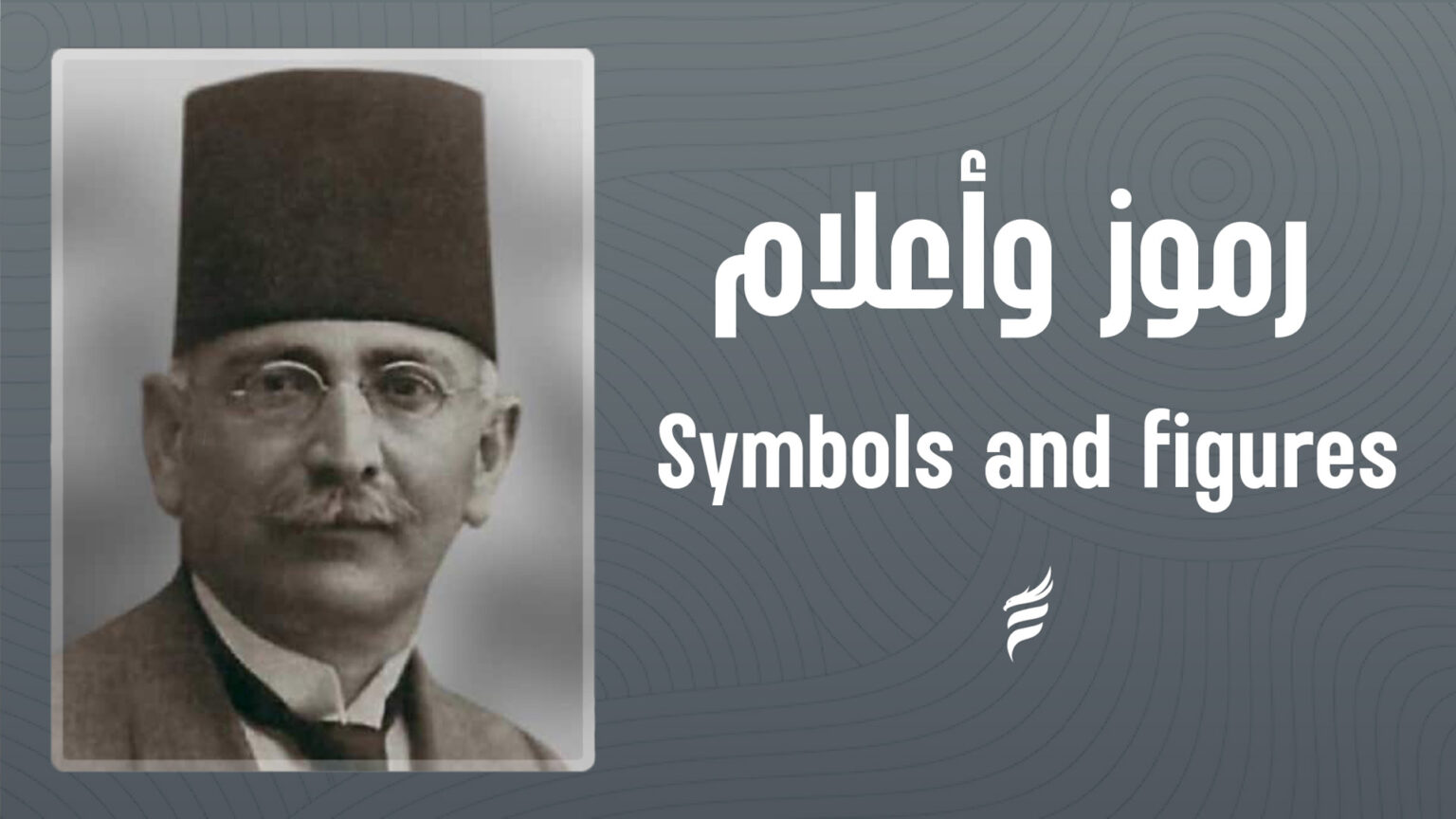
Muhammad Farid ibn Mustafa Kurd Ali was born in Damascus in 1876 to a family of educated people. His Kurdish origins trace back to Sulaymaniyah, while his mother was a Circassian from Damascus.
He received his early education at the Kafil Sibay School, then the Rushdiya School, before transferring to the Azariyya School, where he acquired the fundamentals of modern sciences.
He relied on self-study, mastering Turkish, Persian, and French, and emerged as one of the most prominent intellectuals of his generation, capable of bridging the gap between Arab heritage and modern methodologies in historical research.
Intellectual and Journalistic Foundations:
In 1906, he founded Al-Muqtabas magazine, which within a few years became a leading Arab platform for discussing issues of reform, language, identity, education, and cultural criticism.
The magazine was distinguished by its bold approach to Ottoman policies and its progressive, reformist discourse, making it influential in shaping intellectual consciousness before the end of Ottoman rule.
His Role in Faisal’s Government and the Building of the Syrian Administration:
After Prince Faisal entered Damascus in 1918, he summoned scientific experts to contribute to the establishment of the new administration.
Muhammad Kurd Ali was one of the most prominent of these figures. He worked within the Ministry of Education and contributed to developing initial plans for the Arabization and organization of education. He also served as a cultural advisor and was close to the intellectual circles surrounding Faisal’s government.
The Founding of the Arab Scientific Academy (1919):
The establishment of the Arab Scientific Academy is considered the most important achievement in Muhammad Kurd Ali’s career. Founded in 1919 under his leadership, it became the first Arabic language academy in the modern era.
The Academy played an influential role in:
- The Arabization of administrative and scientific terminology.
- The publication of modern Arabic dictionaries.
- The revival and scholarly dissemination of manuscript heritage.
- The strengthening of the Arab identity of Syrians in the face of colonialism.
The Academy remains active to this day as the oldest continuously operating Arabic language institution since its founding.
His Cultural and Intellectual Contributions:
His influence was concentrated in three main areas:
- National Education and Curriculum Arabization: He participated in early efforts to Arabize textbooks and establish national education as the foundation for nation-building.
- History of Syria: He authored his monumental encyclopedia, “Khitat al-Sham” (Plans of Damascus), between 1925 and 1928, in six volumes. It is considered one of the most important references for studying the cities, heritage, and history of the Levant.
- Revival of Arab Heritage: He oversaw the publication of manuscripts and the adoption of a modern critical approach to the study of history and language, moving away from traditional narratives.
His Stance During the French Mandate:
After the fall of the Syrian Kingdom and the Battle of Maysalun in 1920, he faced harassment from the Mandate authorities and was briefly removed from the presidency of the Academy.
Despite this, he continued his institutional cultural work, preserving these institutions from disintegration—a strategic choice that prioritized protecting the country’s intellectual identity.
His Death and National Legacy
Muhammad Kurd Ali died in Damascus in 1953 after a career spanning more than fifty years in journalism, writing, intellectual pursuits, and institution building.
He is considered one of the founders of the modern Syrian intellectual renaissance, the author of the oldest Arabic linguistic project, and the writer of one of the most important historical references on Damascus and the Levant.
He described Syria as the heart of Arabism, praising its civilizational role—a description that remained prevalent in cultural circles throughout the twentieth century.
Key Historical Events:
1906: Founding of Al-Muqtabas magazine.
1918: His role in the Ministry of Education after Faisal’s entry into Damascus.
1919: Founding of the Arab Scientific Academy, which he headed.
1925–1928: Authoring the Encyclopedia of the Plans of the Levant.
1953: His death in Damascus.
Symbolic Conclusion:
Muhammad Kurd Ali represents a model of the national intellectual upon whose intellectual and institutional efforts the modern Syrian state was built. He understood that a state begins with language, education, and knowledge, and that true independence is embodied in a nation’s awareness of itself and its heritage.
Remembering his legacy is a reaffirmation of the role of scholars and thinkers in building a state of law and knowledge, and a call to continue a national project that believes in culture, freedom, and diversity.
The Syrian Future Movement’s Position:
The Syrian Future Movement affirms that commemorating the legacy of Muhammad Kurd Ali is a tribute to the founding generation who laid the foundations of the modern Syrian state.
It is also a call to continue the path toward a new Syria that embraces all its citizens, is based on the values of diversity, culture, and freedom, and restores knowledge as the cornerstone for building state institutions in the new era.