
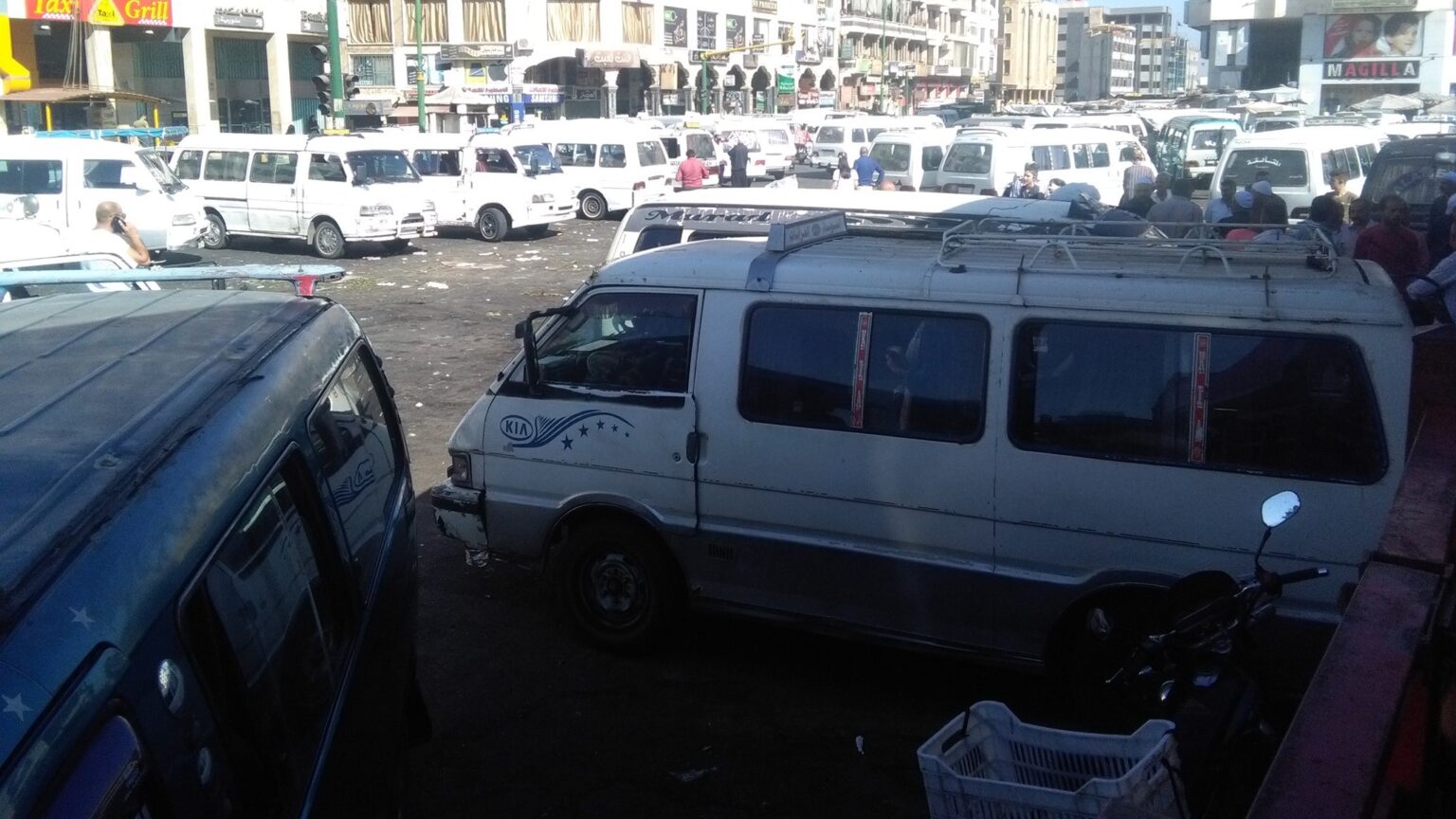
The Syrian Future Movement is closely following the tensions arising from the Latakia Governorate’s decision to reduce passenger transport fares by 20% to 30%, which led to a widespread strike by minibus drivers in the city of Jableh on November 9, 2025. This strike, which disrupted public transportation and caused severe overcrowding at bus stations, reflects a fundamental contradiction in Syrian political economy: reconciling the interests of the working class with the need to alleviate the financial burdens on the most vulnerable social groups, such as students and low-income employees.
The Syrian Future Movement believes that this decision represents a positive step towards redistributing the economic burden, as it aims to improve access to basic services amidst rising living costs. However, ignoring the side effects on drivers’ incomes—who are already facing continuously rising fuel and maintenance prices—jeopardizes social stability and reminds us of classical political economy principles that emphasize that any economic reform must be supported by compensatory mechanisms to avoid exacerbating class disparities.
The Syrian Future Movement sees this crisis as an opportunity to reformulate economic policies in a way that ensures a balance between economic efficiency and social justice. Hasty decisions, as warned by economic activists in their discussions linking this event to broader crises such as electricity price hikes or import restrictions, could escalate social tensions if not supported by comprehensive impact studies.
Therefore, we call for:
- An immediate national dialogue bringing together representatives of drivers, the governorate administration, and the transportation directorate to formulate compromise solutions that take into account workers’ grievances regarding daily losses and the resulting congestion, as documented in field reports.
- Providing direct economic support to workers, including fuel subsidies or financing mechanisms to compensate for losses, to ensure the continuity of services without weakening the purchasing power of the working class, within the framework of a political and economic policy focused on long-term sustainability.
- Implementing comprehensive economic reforms that go beyond temporary solutions, including a review of energy and transportation policies, with a focus on preventing “provocations” against the poor and enhancing transparency to avoid the recurrence of such strikes in other areas like Saqoubin or elsewhere.
The Syrian Future Movement affirms that the path to a prosperous Syria lies in integrating the political economy with the philosophical values of the revolution, where social justice is a practical principle that protects the rights of all. We also warn that ignoring the voice of workers could threaten national unity, and we call on all parties to commit to dialogue as a tool for joint development.