
The Syrian Future Movement is closely monitoring economic developments in the post-liberation phase, particularly decisions related to rebuilding the national economy and regulating markets within the framework of the transition towards sustainable development and social justice.
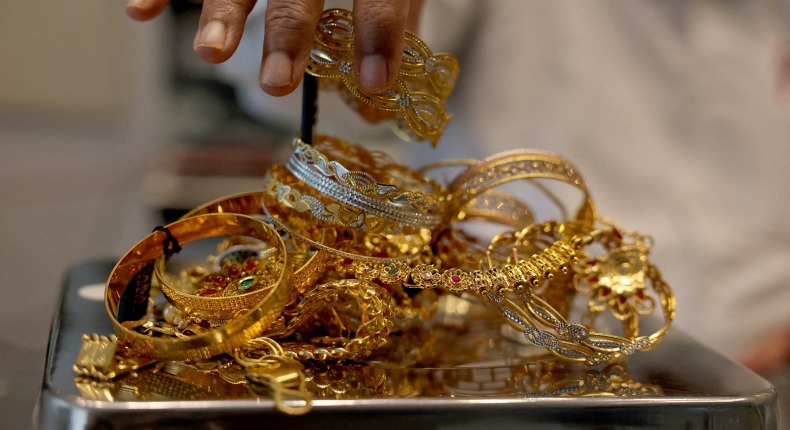
In this context, the Syrian Future Movement is observing the implications of the decision issued by the Precious Metals Authority on November 7, 2025, imposing a total fee of $2,000 USD on every kilogram of foreign gold entering the Syrian market. This fee is divided between a $1,000 customs duty and a similar fee for marking with the Syrian hallmark.
The Syrian Future Movement believes this decision comes at a time of a fragile transitional economy facing high annual inflation, a trade deficit, and the diminished purchasing power of most citizens.
Gold is one of the most important savings tools for Syrian families, especially given the decline in confidence in the local currency and the rise in poverty rates to over 80%.
The gold and jewelry sector also constitutes a significant source of employment and remittances from expatriates, with an estimated volume of between 2 and 3 tons annually, equivalent to approximately $150 million in market value. On the positive side, the Syrian Future Movement believes the decision reflects a move towards regulating the market and protecting domestic industry from unfair competition, especially after years of smuggling and unregulated trading in precious metals.
The fees could also boost state revenues by an estimated $2-4 million annually and contribute to encouraging local manufacturing, which provides employment for tens of thousands of artisans and goldsmiths. This would help reduce the trade deficit and achieve a minimum level of control and transparency in a market long characterized by volatility and chaos.
However, the Syrian Future Movement expresses concern about the potential inflationary impact of the decision on final consumer prices. The new fees (estimated at approximately $2 per gram) could raise gold and jewelry prices by 5-10%, adding further burdens on citizens and threatening to shrink domestic demand and increase informal economic activity and smuggling across borders. Furthermore, the absence of a comprehensive package of supportive policies—such as supporting small workshops, facilitating the import of raw materials, and providing affordable financing for artisans—may make the decision more of a revenue-generating measure than a development tool.
Based on its commitment to the principles of a national social economy, the Syrian Future Movement calls on the transitional government to:
- Link this decision to a comprehensive industrial policy to support the local gold sector through training, financing, and modernization of production tools.
- Allocate a percentage of the collected revenues to establish a price stability fund to compensate affected groups.
- Enhance customs transparency and border control to curb smuggling and monopolies.
- Involve economic stakeholders and civil society in assessing the impact of the decision before its full implementation.
The Syrian Future Movement emphasizes that rebuilding the Syrian economy requires balanced policies that combine encouraging domestic production with ensuring social justice. It asserts that achieving economic sovereignty is not accomplished through tariffs alone, but rather through diversifying income sources, supporting agriculture, small industries, and renewable energy, thereby guaranteeing genuine and sustainable growth for all Syrians.