
Introduction:
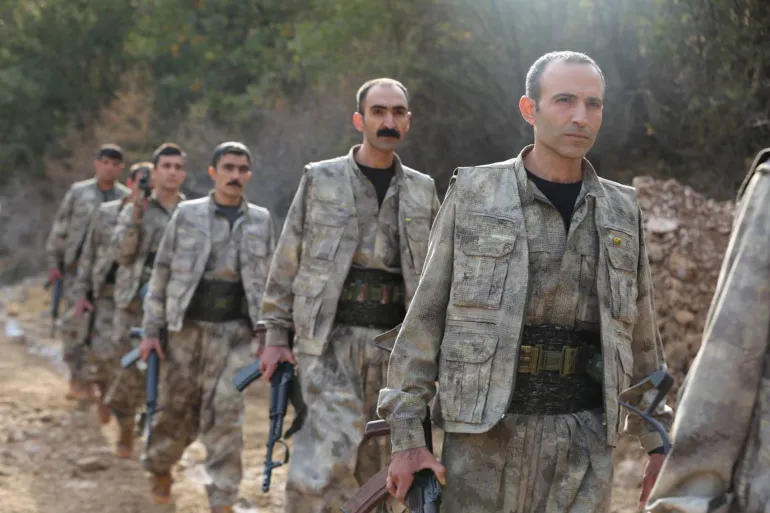
In a historic step described as the beginning of a new phase toward peace and stability, the Kurdistan Workers’ Party (PKK) announced its withdrawal from Turkish territory to external areas, as part of a process of disarmament and easing tensions with the Turkish state.
These developments come within the context of a long armed conflict that has been ongoing for four decades and represent a strategic turning point at the regional level, particularly in northern Syria, where Syrian Kurdish forces ideologically and organizationally linked to the PKK pose a direct threat to Turkish security.
This assessment aims to examine the implications of this news for the Syrian situation, particularly for the SDF, and the prospects for implementing the March agreement between Sharaa and Abdi, while offering practical recommendations that can benefit decision-makers and Syrian civil society.
Situation Analysis:
A. Impact on Turkey:
Reduced direct military pressure on the northern Syrian border.
Redirecting Turkish strategy toward diplomacy and security monitoring instead of military escalation.
This step could be considered the beginning of a reduction in direct Turkish involvement in the conflict in northeastern Syria, provided the PKK continues to adhere to its withdrawal decision.
B. Impact on the Kurdistan Workers’ Party (PKK):
An opportunity to reduce reliance on military force and transition to civilian political action in the region.
Strengthening its role as a “political mediator” within regional transformations, particularly in relations with Syrian Kurdish forces.
C. Impact on the SDF and the implementation of the March Agreement:
The decline in direct Turkish pressure provides a suitable environment for moving the political process forward in accordance with the March Agreement.
An opportunity to enhance the SDF’s political legitimacy by reducing its reliance on armed force and capitalizing on regional transformations to promote civilian participation.
Also, there is the need to manage the internal balance to prevent divisions within the SDF resulting from the shift from military force to a political role.
Key Challenges:
- The SDF’s Political Transition: Resistance by some military leaders to limiting military influence could expose the operation to internal tensions.
- Turkish Interaction: Any disruption to the withdrawal arrangements or the emergence of new armed groups could prompt Ankara to escalate again.
- Trust Between Syrian Parties: Ensure Damascus’s effective participation in implementing the March Agreement to avoid attempts to re-impose unilateral control.
Recommendations for the Syrian Future Movement:
- Strengthening the Political Framework: Encouraging the SDF to gradually transition from military action to a civilian political role in accordance with the March Agreement, while taking into account the balance of local powers.
- Taking Advantage of the Regional Environment: Using the PKK withdrawal from Turkey as a “historic opportunity” to encourage Syrian authorities to accept the consolidation of local governance mechanisms and Kurdish civil participation in a manner that deviates from extreme centralization and does not create a fragile or weak state.
- Protecting Border Stability: Supporting cooperation with the international community to ensure monitoring of the withdrawal and preventing any military attempts that could lead to escalation.
- Developing dialogue platforms: Increasing the opening of negotiation channels at all levels between the SDF and Damascus, under the supervision of all national political forces, to implement the agreement in a practical and sustainable manner.
- Civil society awareness: Disseminating a culture of peaceful political transition and supporting civic education programs to enhance acceptance of new transformations among the grassroots.
Conclusion:
The withdrawal of the Kurdistan Workers’ Party (PKK) from Turkey represents a strategic turning point that could redraw the map of the regional conflict and open the door to a more favorable environment for implementing the March agreement in Syria. The success of this phase depends on the ability of the Syrian parties to shift toward civilian politics, manage regional pressures, and develop reliable mechanisms for joint governance, achieving security and stability and guaranteeing the rights of all Syrian components.
The Syrian Future Movement sees this moment as a historic opportunity to strengthen national peace and support the peaceful political transition process in northeastern Syria, while protecting the sovereignty and territorial integrity of the Syrian state.