
Abstract:
The issue of public parks in Syria, particularly in the capital, Damascus, has witnessed increasing controversy in recent years due to the government’s move to include some green spaces in investment projects under the umbrella of reconstruction and tourism development. This study aims to analyze the reality of parks in Syria in light of this trend, discuss its social, environmental, and urban risks, compare it to successful international experiences in public space management, and review relevant national and international legal frameworks. The aim is to provide practical recommendations for decision-makers, the private sector, and civil society.
First, a general background and the importance of the research:
Public parks are one of the most prominent components of the modern urban structure, given their environmental, social, and cultural functions. In Syrian cities, especially Damascus, parks have historically been linked to civic identity and collective memory. However, the years since 2011 have witnessed a significant decline in the maintenance of these spaces, coupled with increasing urban and economic pressures that have prompted some municipalities to consider investing in them through commercial or tourism contracts.
In September 2025, the Syrian government announced the signing of $1.5 billion in tourism investment contracts, including entertainment and hotel projects in several cities (Reuters, 2025).
Although the announcement did not directly mention parks, a growing local debate has addressed whether some of these projects will extend to parts of public parks, such as Al-Jalaa Park in Damascus, where local media outlets reported tree-cutting and maintenance work that sparked public protests (Al-Araby Al-Jadeed, 2025).
Second, the legal framework governing public parks in Syria:
- The Syrian Constitution:
Article (14) of the 2012 Constitution of the Syrian Arab Republic stipulates that “natural resources, facilities, institutions, and public utilities are public property, and the state undertakes to manage their investment for the benefit of the people as a whole.” This means that any disposal of public property, including parks, must be conducted in accordance with the principles of public interest and transparency. Article 16 of the Interim Constitutional Declaration issued after the liberation on March 13, 2025, stipulates that ownership of public funds is protected, and all natural resources are public property. The state shall preserve, exploit, and invest them for the benefit of society. - Municipal and Regulatory Laws:
The management of public parks is subject to the provisions of Local Administration Law No. 107 of 2011 and the municipal laws preceding it. Local councils are responsible for establishing, maintaining, and designating parks as public facilities for social benefit.
The law permits the granting of limited-term investment contracts within parks, provided that their public character is preserved and that changes to the land use are prohibited (Ministry of Local Administration, 2023). - International Commitments:
As a member of the United Nations, Syria adheres to the principles of the United Nations Human Settlements Programme (UN-Habitat) and the World Health Organization (WHO), which affirm that public green spaces are a pillar of sustainable urban development and population health (UN-Habitat, 2021; WHO, 2016).
Third, an analysis of the reality of parks in Damascus:
- The current scene:
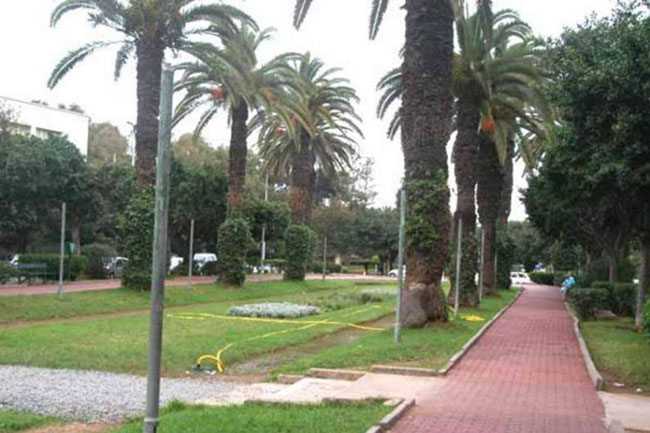
Damascus is one of the Syrian cities with the largest number of public parks. However, official reports (SANA, 2025) indicate a decline in green spaces due to urban growth and declining municipal resources.
Unofficial data indicate that the percentage of green spaces has decreased to less than 1.5 square meters per capita, compared to the minimum internationally recommended amount (9 square meters per capita according to the WHO). - The debate over “park investment”:
From mid-2024 to the fall of 2025, there has been increasing talk in the local media about municipalities’ intention to offer some parks for public service investment.
The Syrian newspaper Al-Thawra (August 21, 2025) published an article titled “Damascus Parks: Between Investment and Preservation,” addressing the challenge of balancing financial resources and preserving public property. The articles and reports also sparked public debate about the risk of converting parks into closed or semi-private commercial projects. - The Al-Jalaa Park Incident:
In October 2025, local and international media reported maintenance work and tree cutting in Al-Jalaa Park in Damascus, leading to limited protests and demands to clarify the nature of the project. Although some parties denied any “privatization,” the incident exposed the fragility of oversight mechanisms and the lack of transparency in investment contracts (Al-Araby Al-Jadeed, October 13, 2025).
Fourth: The environmental and social dimensions of unjust investment:
The right to a healthy environment: The decline in green spaces increases air pollution rates and urban heat, affecting public health (WHO, 2016).
Social gap: Public parks represent a major outlet for low-income groups, and their privatization deprives these groups of free spaces for recreation and leisure.
Urban memory: Many of Damascus’ parks (such as Tishreen and Al-Jalaa) form part of the city’s cultural and social memory, and changing their character deprives the city of part of its architectural identity.
Economic sustainability: Short-term investment returns may be offset by long-term losses in quality of life and the environment, as confirmed by World Bank studies and urban development programs (World Bank, 2022).
Fifth: Comparative International Experiences:
Barcelona, Spain: The city implemented the “Superblocks” model, which redistributed urban space in favor of pedestrians and green spaces, reducing pollution and increasing social cohesion (C40 Cities, 2023).
Bogotá, Colombia: It implemented the Ciclovía program, which opens streets and parks to citizens on specific days, promoting physical activity and social interaction without compromising public property (UN-Habitat, 2021).
Istanbul, Turkey: The city faced widespread protests in 2013 following an investment project in Gezi Park, which instilled community awareness of the importance of public space as a component of national identity and subsequently prompted authorities to reconsider their commercialization policies (TÜBİTAK, 2014).
Conclusion:
Based on the above, we, at the Scientific Office of the Syrian Future Movement, recommend the following:
- To decision-makers:
Ensure complete transparency in investment contracts and publish the terms of reference to the public.
Require investors to conduct environmental and social impact studies before any intervention in public parks.
Establish a community oversight system involving academics and civil society.
Update the Municipalities Law to limit the granting of permanent licenses within green spaces. - To the private sector:
Adopt the concept of “responsible investment” that preserves the public character of parks.
Fund sustainable afforestation and maintenance programs in exchange for limited advertising or service benefits.
Adhere to the United Nations Sustainable Urban Development Goals (SDG 11). - To civil society and citizens:
Promote a culture of participation in protecting the urban environment.
Launch voluntary afforestation and periodic maintenance campaigns.
Exercise the legal right to access information and object to projects that harm the public environment.
The issue of investing in public parks in Syria represents a microcosm of the conflict between the needs of economic development and the demands of environmental and social justice. International experience demonstrates that sustainable development does not mean transforming public space into a commodity, but rather balanced management that achieves mutual benefit and preserves the environment and civic memory.
Based on current data, the Syrian Future Movement affirms that protecting public parks is not and will not be an environmental luxury, but rather a national, health, and cultural necessity to ensure the cohesion of Syrian society and the rebuilding of its cities on sustainable human foundations.
the reviewer:
- Reuters. (2025, September 25). Syria signs $1.5 billion tourism investment deals.
- Syrian Al-Thawra Newspaper. (2025, August 21). Damascus Gardens: Between Investment and Preservation.
- Al-Araby Al-Jadeed. (2025, October 13). Cutting down trees in Al-Jalaa Park sparks controversy in Damascus.
- Constitution of the Syrian Arab Republic. (2012). Article (14).
- Ministry of Local Administration and Environment. (2023). Local Administration Law No. 107 of 2011 and its amendments.
- World Health Organization (WHO). (2016). Urban green spaces and health.
- UN-Habitat. (2021). The Value of Urban Public Spaces.
- C40 Cities. (2023). Barcelona Superblocks case study.
- TÜBİTAK. (2014). Urban transformation and public space in Istanbul.
- World Bank. (2022). Greening Urban Growth: Pathways to Sustainable Cities.