
Introduction:
In the context of the political and economic transformations taking place in Syria following the fall of the Assad regime in December 2024, the launch of the “Syrian Development Fund” represents a strategic step towards reconstruction.
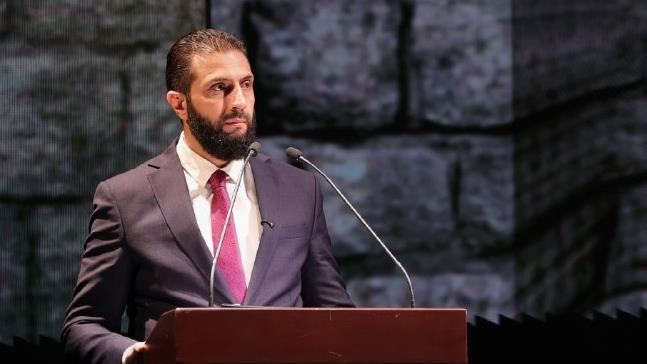
President Ahmad al-Shara announced the establishment of the fund on Thursday, September 4, 2025, during an official ceremony at the Damascus Citadel. The establishment was based on Presidential Decree No. 112 of 2025, which grants the fund a financially and administratively independent legal personality, with its link to the Presidency of the Republic and its headquarters in Damascus.
This announcement comes amid a decline in Syria’s gross domestic product (GDP) by more than 64% since 2011, according to estimates by international organizations, making sustainable development a national priority.
This situation assessment aims to analyze the fund’s objectives, public reactions, and potential and observed positives and negatives, while offering recommendations to enhance its effectiveness.
Objectives and Legal and Financial Framework of the Fund:
The Fund is defined as an economic institution that aims to support reconstruction by financing infrastructure restoration projects, including roads, bridges, water and electricity networks, airports, ports, and telecommunications networks. It also focuses on improving vital services related to citizens’ daily lives, facilitating the return of displaced persons, and providing interest-free loans for development projects.
In his speech on September 4, 2025, President al-Shara emphasized that the Fund represents “a new phase of construction and reconstruction in which we are writing Syria’s new history with our own hands, money, and effort.” He emphasized the rejection of “charity” and called on Syrians to contribute as a “national honor.”
Financially, funding sources rely on individual donations inside and outside Syria, the “Permanent Donor” program (monthly subscriptions), and grants and donations in accordance with applicable laws. Initial responses have shown remarkable success, with donations exceeding $61 million from 526 donors within hours of its launch.
The President emphasized high transparency, saying, “It will be highly transparent and will work to disclose all funds spent on strategic projects,” with oversight from independent audit firms.
Popular Reactions: Views of Supporters and Opponents:
The launch of the fund witnessed widespread public interaction, with crowds gathering in major squares such as Saadallah al-Jabri Square in Aleppo, New Clock Square in Homs, Asi Square in Hama, Al-Khatib Square in Quneitra, and Governorate Square in Tartous on September 4, 2025, to follow the event live. These gatherings reflected national enthusiasm, with symbolic donations such as the $500 donation made by Khaled Hassan al-Murr (Abu Muhammad).
Based on our monitoring of social media (real pages, not fake ones) and the assistance of our media office team in monitoring comments, we divided the commenters into two categories: supporters and opponents. We attempted to draw on these comments without relying on them.
Supporters view the fund as a tool to promote economic independence and national unity, praising its focus on Syrians’ own efforts rather than foreign aid and job creation. Statements by the fund’s director, Mohamed Safwat Raslan, emphasized that it “will become a symbol of transparency, stability, and an engine of growth.”
On the other hand, some conservatives have expressed concerns about the fund’s connection to the presidency, which could limit independent oversight, especially given the extreme poverty affecting half of Syrians and the 16.7 million people in need of humanitarian assistance, according to UN estimates for 2025. Some have criticized the “excessive hype” of the initiative rather than its focus on practical implementation, with questions raised about the adequacy of donations compared to the enormous needs. They have also criticized donations from figures associated with the former regime, such as the sons of Mohamed Hamsho.
Media reports have also raised concerns about the lack of rigorous feasibility studies and project selection mechanisms, which could expose the fund to corruption risks.
Potential Pros and Cons:
Among the main advantages, the fund provides a structured framework for reconstruction, enhancing economic stability by creating jobs and attracting investment, especially after the end of US sanctions in May 2025, as Reuters reports.
The promised transparency also enhances confidence in the new institutions and encourages the participation of the private sector and Syrian communities abroad, potentially opening doors for cooperation with Gulf states and international organizations.
Cons include the risks of concentrating financial power without independent popular oversight and opaque implementation mechanisms, which could lead to a repetition of past mistakes in managing funds.
Furthermore, the call for donations could be a burden on the population in light of the poverty and limited resources compared to the devastation. Devex reports have warned of a decline in international funding. Furthermore, the involvement of controversial figures in the launch has raised doubts about its credibility.
Conclusion:
To ensure the success of the fund, we, in the Syrian Future Movement’s Economic Bureau, recommend establishing an independent oversight body that includes representatives from civil society and international experts, and publishing monthly financial reports.
The private sector should also be involved through partnerships, and a clear timeline for projects should be established based on feasibility studies by the end of 2025. Resources should also be allocated to support displaced persons in the most affected areas, such as Aleppo and Homs.
We recommend collaborating with international organizations such as the World Bank to enhance transparency and launching awareness campaigns to address criticism through public hearings.
Finally, diversifying funding sources to avoid total reliance on individual donations, while taking into account the economic situation of citizens.
The Syrian Development Fund represents a historic opportunity to rebuild Syria, but it requires transparent governance and inclusive participation to avoid failure. Given the economic and social challenges, its success depends on balancing national ambition with practical realism, making it a test for the new administration in building a stable and prosperous state.