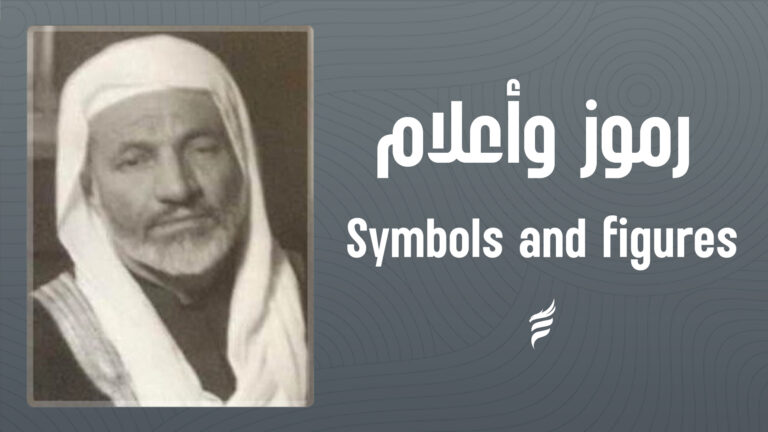

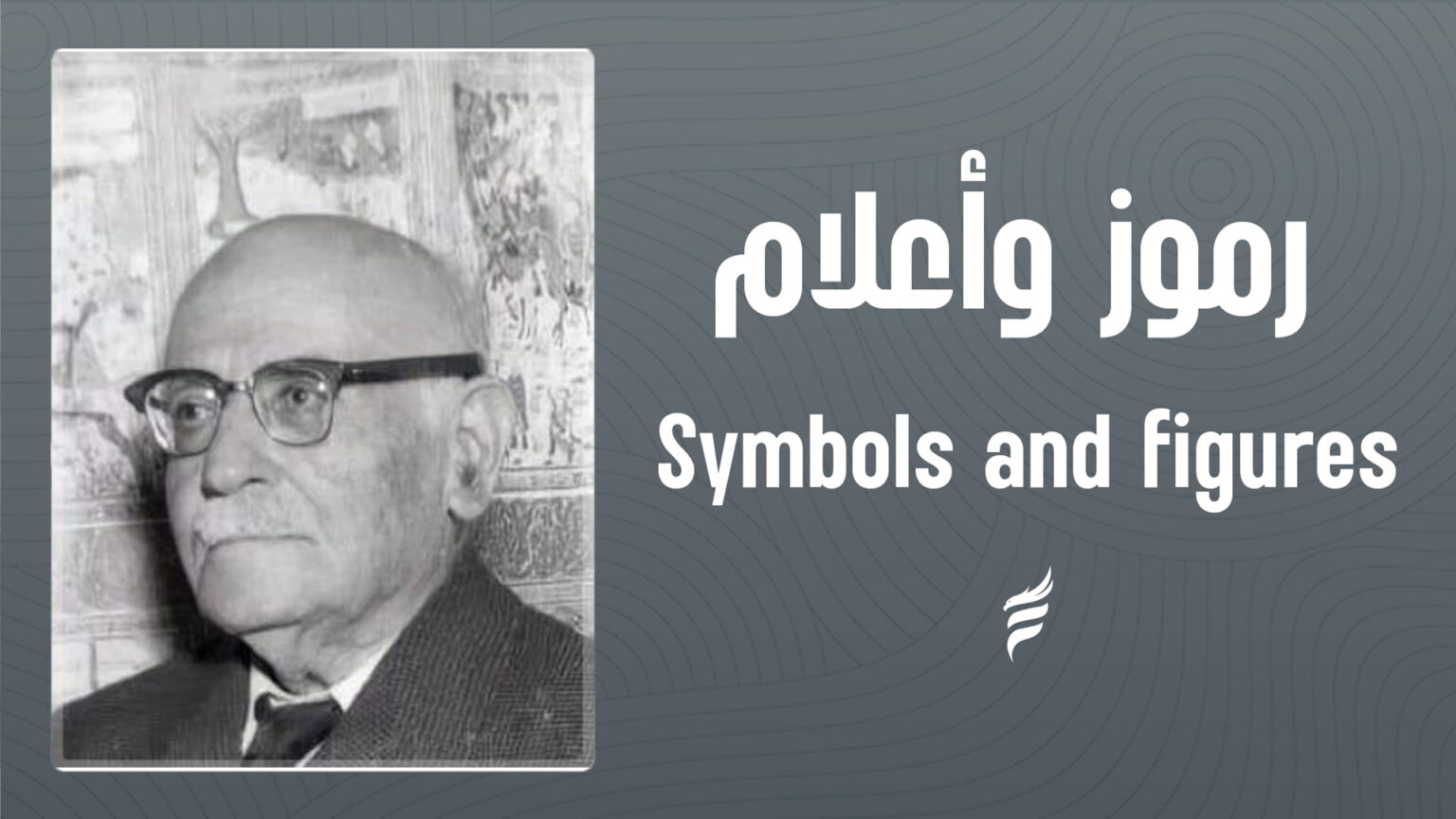
Sati’ al-Husri was born in Yemen in 1879, while his father was serving as President of the Court of Appeal in Sana’a. He moved with his family between Sana’a, Tripoli, Konya, and Ankara, where he received his education in Ottoman schools before enrolling in the Royal Institute in Istanbul, from which he graduated in 1900.
Educational Beginnings:
He taught in Ottoman schools in Greece until 1906, then moved to the government service and held senior administrative positions in Greece and Bulgaria. He later returned to teaching at the Royal Institute and founded a private school in Istanbul called “The Modern School.” He also launched a quarterly scientific journal called “Anwar al-Ulum.”
During World War I, he was appointed director of the Teachers’ College in the Ottoman capital.
From Turkification to Arab Nationalism:
In his early years, he was influenced by Turkish thought and wrote in the magazine “Türk Oğani,” calling for Turkification. However, after the executions of May 6, 1916, in Damascus, he began to sympathize with the Great Arab Revolt led by Sharif Hussein. In October 1918, he moved to Damascus to join the Arab government headed by Prince Faisal bin Hussein.
His role in King Faisal’s government in Damascus:
He was appointed Director of Education, working to Arabize curricula and develop schools. He also reopened the Institutes of Medicine and Law, and appointed the writer Labiba Hashem to the educational inspection corps, making her the first woman in the Syrian educational administration.
In 1920, he became the first Minister of Education in the government of Lieutenant General Rida al-Rikabi, then returned to the position in the government of Hashim al-Atassi.
Al-Husri was known for his participation in negotiations with General Gouraud before the Battle of Maysalun, but he returned disappointed. The Syrian Kingdom collapsed after a defeat on July 24, 1920. He accompanied King Faisal on his departure from Damascus.
In Iraq and the Building of Education:
After Faisal’s coronation as King of Iraq in 1923, al-Husri assumed responsibility for overseeing educational curricula and establishing the College of Law in Baghdad. He insisted on developing a unified national curriculum and rejected the establishment of sectarian schools.
One of his most notable achievements was the publication of “The Khaldunian Reading,” in which religious education was separated from the Arabic language.
Nationalist Thought and the Arab Experience:
Al-Husri was known as one of the most prominent theorists of Arab nationalism in the twentieth century.
He believed that a unified language was the foundation of the nation, and that a culture based on Arabic was the deepest bond between peoples. He rejected regionalism and isolationism and warned against “cultural slavery” to the West.
In Syria, he returned in 1943 as an advisor to the Ministry of Education at the invitation of Saadallah al-Jabiri, and President Shukri al-Quwatli awarded him the Syrian Order of Merit. He issued reform proposals, which the Ministry of Education compiled in the book “Reports on the State of Education in Syria and Proposals for its Reform.”
In Egypt, he served as Dean of the Institute of Higher Arab Studies, commissioned by President Gamal Abdel Nasser, and as a cultural advisor to the League of Arab States.
He engaged in intellectual debates with Taha Hussein and Antoun Saadeh, emphasizing that Arab literature and identity transcend regional boundaries.
Sati’ al-Husri’s most prominent statements:
- Regional isolationist calls hinder the unity of the Arab nation.
- The first thing required to achieve Arab unity is to awaken nationalist sentiment.
- Thinking about some matters independently of religion does not mean denying religion.
- Unity generates new life and new forces, surpassing the sum of disparate forces.
His death and honor:
He died in Baghdad on December 23, 1968, and was buried in the Al-Khayzuran Cemetery in Al-A’dhamiyah. The League of Arab States honored him in the early 1970s, and several Syrian schools in Damascus, Raqqa, and Deir ez-Zor were named after him. Among his most notable works are:
- The Method of Teaching the Alphabet: A Khaldunian Reading Guide.
- From Modern Arab History
- Arabism between its advocates and its opponents.
- Arabism first!
His son, Dr. Khaldoun al-Husri, also excelled as an academic and writer, and his granddaughter, Mayada al-Askari, as an Iraqi journalist and translator.
The Syrian Future Movement and Sate’ al-Husri:
As we, in the Syrian Future Movement, commemorate the life of the educational and nationalist thinker Sate’ al-Husri, we emphasize the importance of drawing inspiration from our national symbols in building a modern Syrian state based on justice and inclusive citizenship.
Great leaders are not merely a memory from the past, but rather inspiring models for shaping the future, where the new Syrian republic is built on the foundations of belonging and dignity, not on narrow loyalties or subservience.