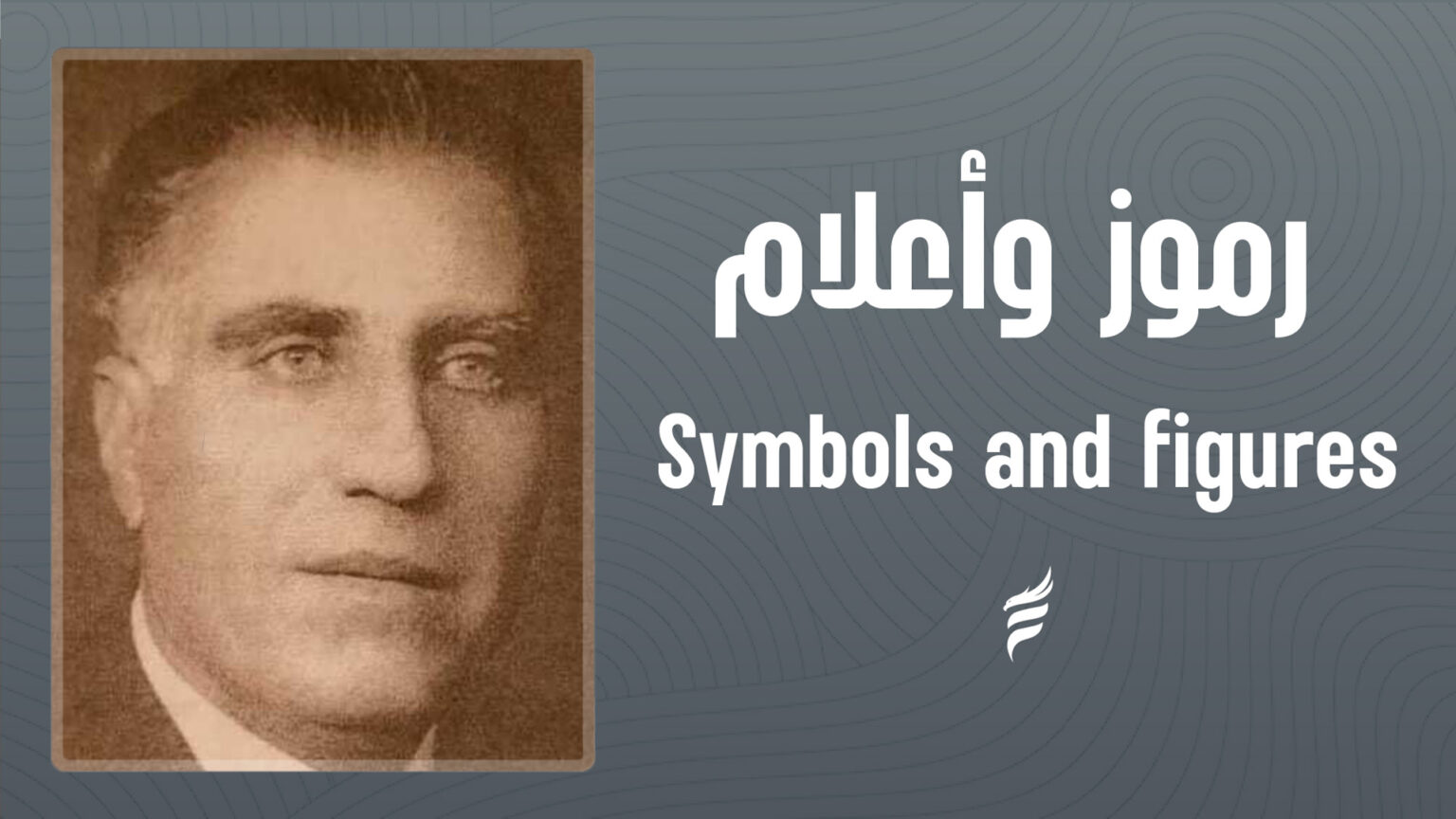
Sa’id Ishaq was born in 1902 in Qal’at al-Umara, Mardin Province, and grew up in a well-established Syriac Orthodox family rooted in the Levant. He received his early education at the Ruqbah School in Deir al-Za’faran, where he mastered Arabic and Kurdish and became familiar with Turkish, in addition to his native Syriac.
He also delved into the study of the Abrahamic religions: Islam, Christianity, and Judaism, which gave him a broad outlook and a tolerant view of the religious and cultural diversity of his homeland.
He moved to Amuda after the decision to annex Mardin to Turkey.
He first worked in the construction of the railway between Iraq and Syria, then in small-scale trade, selling textiles.
He was known in Amuda as “Father of the Poor” for his generosity and compassion, secretly distributing a portion of his crops to the needy and sending donations to mosques and churches.
His crops were repeatedly confiscated by the French authorities due to his patriotic stances.
- In 1928, he founded the Amuda Municipal Council and was elected its president.
- In 1932, he ran for parliament representing Hasakah, Qamishli, and Dijla, winning membership in the council’s bureau and secretariat.
- In 1936, he was elected again, representing the Syrian Jazira.
- In 1943, he won the position of parliamentary observer with 83 votes out of 120.
- In 1949, he entered parliament representing the Qamishli district.
- On October 1, 1951, he became deputy speaker of parliament.
Amid the political crisis that followed the resignation of Hassan al-Hakim’s government and the appointment of Ma’ruf al-Dawalibi, followed by Adib al-Shishakli’s coup and the dissolution of parliament, President Hashim al-Atassi submitted his resignation on December 2, 1951, to Sa’id Ishaq, who served as first deputy speaker of parliament.
Under the constitution, Ishaq assumed the position of acting president for 24 hours (from December 2 to 3, 1951), marking his name as the first Christian president of contemporary Syria.
Saeed Ishaq died in the United States in 1989 after a five-year illness.
The Syrian Embassy sent the national flag to drape his body in honor of his national legacy.
Remembering a figure like Saeed Ishaq is not merely a historical commemoration; it is an invitation to reflect on the path to building the modern Syrian state and to draw inspiration from the values of freedom, sovereignty, and justice.
We, in the Syrian Future Movement, affirm that his national legacy inspires us to continue working for a new Syria, one that embraces its religious and cultural diversity and promotes the spirit of inclusive citizenship.