
Introduction:
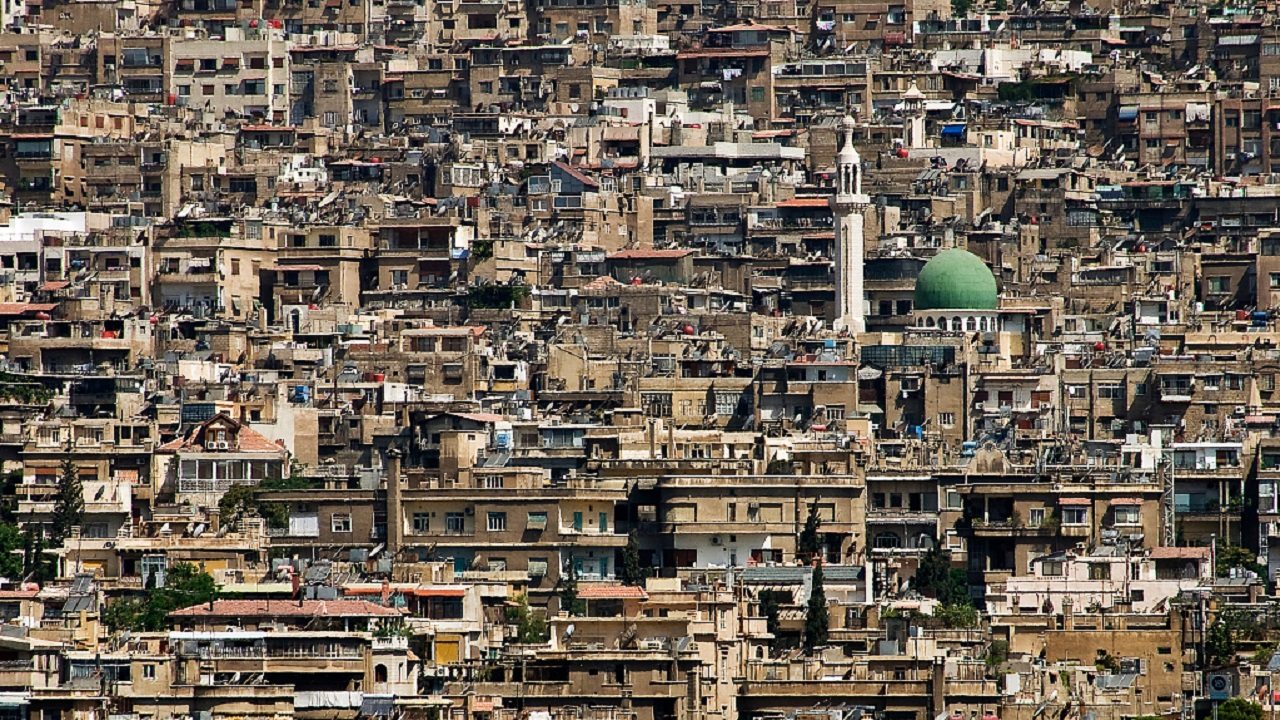
Damascus is one of the oldest continuously inhabited capitals in history, and holds exceptional cultural, civilizational, and political significance in the Arab and regional context.
However, rapid population growth, uncontrolled urban expansion, the increasing complexity of urban services, and its status as a major destination for Syrians and non-Syrians after the fall of Assad have imposed unprecedented challenges on its traditional, highly centralized administrative model.
In light of global transformations in the management of major cities, it has become imperative to reconsider Damascus’s administrative model and transition to a modern model based on smart governance, executive and financial decentralization, and effective community participation.
First: The structural problem in the administration of Damascus:
For decades, Damascus has relied on a centralized administrative model, represented by a single municipality directly subordinate to the Ministry of Local Administration, often subject to overlapping powers with the Damascus Countryside Governorate. This model, which was appropriate in earlier stages of the city’s history, has become incapable of keeping pace with contemporary challenges, such as:
- Horizontal and vertical urban expansion that has exceeded the limits of traditional planning.
- Increasing pressure on infrastructure and public services (water, electricity, transportation, waste).
- Poor coordination between various service providers and the absence of a unified database.
- Limited local financial resources and municipalities’ reliance on central transfers.
Experiences in major cities have shown that a single central administration loses its effectiveness in cities with populations exceeding one million, requiring multi-level models.
Second: Inspiring International Models for Managing Major Capitals:
Successful international experiences in managing major cities can be drawn from, such as:
- Istanbul: It includes 39 sub-municipalities, each with an elected council and independent executive powers. It is supervised by the Istanbul Metropolitan Municipality, which is responsible for strategic planning and overall coordination.
- Paris: It is divided into 20 districts, each with a mayor and a local council. It is managed through a participatory model that integrates civil society into decision-making.
- Cairo: Despite challenges, it has begun implementing the Greater Cairo model, with a functional administrative division that takes into account population and service distribution.These models emphasize the importance of decentralization, decentralization, and the development of local governance tools to ensure efficient services and equitable distribution.
Third: A Structural Proposal for the Administration of Greater Damascus:
Based on the current reality and international experiences, a modern administrative model for Damascus can be proposed based on the following principles:
- Administrative Division into Sub-Municipalities:
Dividing the capital into sub-municipal units balanced in terms of population and area, such as Old Damascus, Mezzeh, Barzeh, Kafr Sousa, Jobar, Tadamon, Midan, Qaboun, and others. Each sector is granted executive powers in the areas of urban planning, sanitation, lighting, markets, and others.
We believe this model allows for rapid responses to local needs and enhances accountability and transparency. - Establishing a Greater Damascus Municipal Council:
A higher body called the “Greater Damascus Municipal Council” will be formed, responsible for strategic planning, coordination between sub-municipalities, and management of major cross-sectoral projects (public transportation, urban planning, disaster management).
The administrative and financial link with the Rural Damascus Governorate will be severed to ensure the independence of municipal decision-making, as is the practice in administratively independent cities. - Implementing Fiscal Decentralization:
Sub-municipalities are allowed to collect their own local revenues from service fees, property taxes, and municipal investments. These resources are used directly to fund local projects without reference to the central government.
Studies have shown that fiscal decentralization increases spending efficiency and increases citizen satisfaction with services (Smoke, 2003). - Introducing the Smart City Concept:
Smart city technologies are used in traffic management, service monitoring, electronic payments, and connecting municipalities to a central data system that enables real-time analysis and data-driven decision-making. According to a McKinsey report (2018), implementing smart city technologies can improve quality of life by up to 30% in major cities. - Enhancing Community Participation:
Each sub-municipality is established with an elected neighborhood council that participates in formulating spending priorities, monitoring performance, and submitting proposals. Digital participation tools (surveys, interactive applications) are also implemented.
Community participation is a fundamental pillar of urban governance and enhances trust between citizens and institutions. - A special municipality for the Old City:
An independent municipality will be designated to manage Old Damascus, given its historical and heritage character. It will be granted special powers in restoration, tourism regulation, and the preservation of its architectural identity, in cooperation with international bodies such as UNESCO. Cities such as Fez and Marrakesh in Morocco have successfully implemented this model, contributing to the preservation of heritage and the development of cultural tourism (UNESCO, 2012). - Development of a smart mass transit system:
Plans are underway to connect Greater Damascus with an integrated mass transit network that includes a metro, electric buses, centralized stops, and smart traffic management applications. Smart mass transit is one of the most important tools for urban justice and significantly reduces pollution and congestion.
Fourth: Potential Challenges and Addressing Mechanisms:
Despite the importance of this model, its implementation faces challenges, including:
- Resistance of traditional bureaucracy to change.
- Lack of qualified local personnel.
- The need for legislative amendments to the Local Administration Law.
- Limited initial funding for establishing smart infrastructure.
- To address these challenges, we propose:
- Launching training programs for municipal personnel.
- Involving universities and research centers in policy formulation.
- Cooperating with international donors to support digital transformation.
- Amending the Local Administration Law to allow for executive and financial decentralization.
Conclusion:
The transition from traditional central administration to a multi-level smart governance model is a strategic necessity for Damascus, not just an administrative option. The capital, which bears the burden of history, faces the challenges of the present, and aspires to a sustainable urban future, requires a flexible, transparent administrative model built on community participation and modern technologies. Restructuring Damascus’s administration according to this model will restore its role as the true capital of the state and its citizens, enhance its ability to respond to development challenges, and consolidate its position among the world’s modern capitals.
the reviewer:
- Arnstein, S. R. (1969). A ladder of citizen participation. Journal of the American Institute of Planners, 35(4), 216–224. https://doi.org/10.1080/01944366908977225
- Bacqué, M.-H., & Gauthier, M. (2011). Participatory democracy in Paris: Between symbol and practice. Participations, 1(1), 36–55. https://shs.cairn.info/revue-participations-2011-1-page-36?lang=fr
- Kalaycıoğlu, S. (2017). Local government in Turkey: Structure and reform. In M. Kersting (Ed.), Local governance reform in global perspective (pp. 45–62). Springer. https://doi.org/10.1007/978-3-030-02047-7_3
- McKinsey Global Institute. (2018). Smart cities: Digital solutions for a more livable future. McKinsey & Company. https://www.mckinsey.com/~/media/mckinsey/industries/public%20and%20social%20sector/our%20insights/smart%20cities%20digital%20solutions%20for%20a%20more%20livable%20future/mgi-smart-cities-full-report.pdf
- OECD. (2015). The metropolitan century: Understanding urbanisation and its consequences. OECD Publishing. https://doi.org/10.1787/9789264228733-en
- OECD. (2019). Making decentralisation work: A handbook for policy-makers. OECD Publishing. https://doi.org/10.1787/g2g9faa7-en
- Smoke, P. (2003). Decentralisation in Africa: Goals, dimensions, myths and challenges. Public Administration and Development, 23(1), 7–16. https://doi.org/10.1002/pad.255
- United Nations Development Programme (UNDP). (2016). Decentralization and local governance in the Arab States. UNDP. https://www.undp.org/saudi-arabia/publications/recent-and-current-interventions-pa-lg-arab-states
- United Nations Human Settlements Programme (UN-Habitat). (2020). State of Arab cities report 2020: Financing sustainable urban development in the Arab region. UN-Habitat. https://unhabitat.org/state-of-arab-cities-report-2020-financing-sustainable-urban-development-in-the-arab-region
- United Nations Educational, Scientific and Cultural Organization (UNESCO). (2016). Culture: Urban future – Global report on culture for sustainable urban development. UNESCO. https://unesdoc.unesco.org/ark:/48223/pf0000246291
- International Association of Public Transport (UITP). (2020). Public transport: The smart solution for cities. UITP. https://www.uitp.org/publications/public-transport-the-smart-solution-for-cities/
- World Bank Group. (2021). Greater Cairo urban development project. World Bank. https://documents.worldbank.org/en/publication/documents-reports/documentdetail/730531468235161396/egypt-greater-cairo-urban-development-project