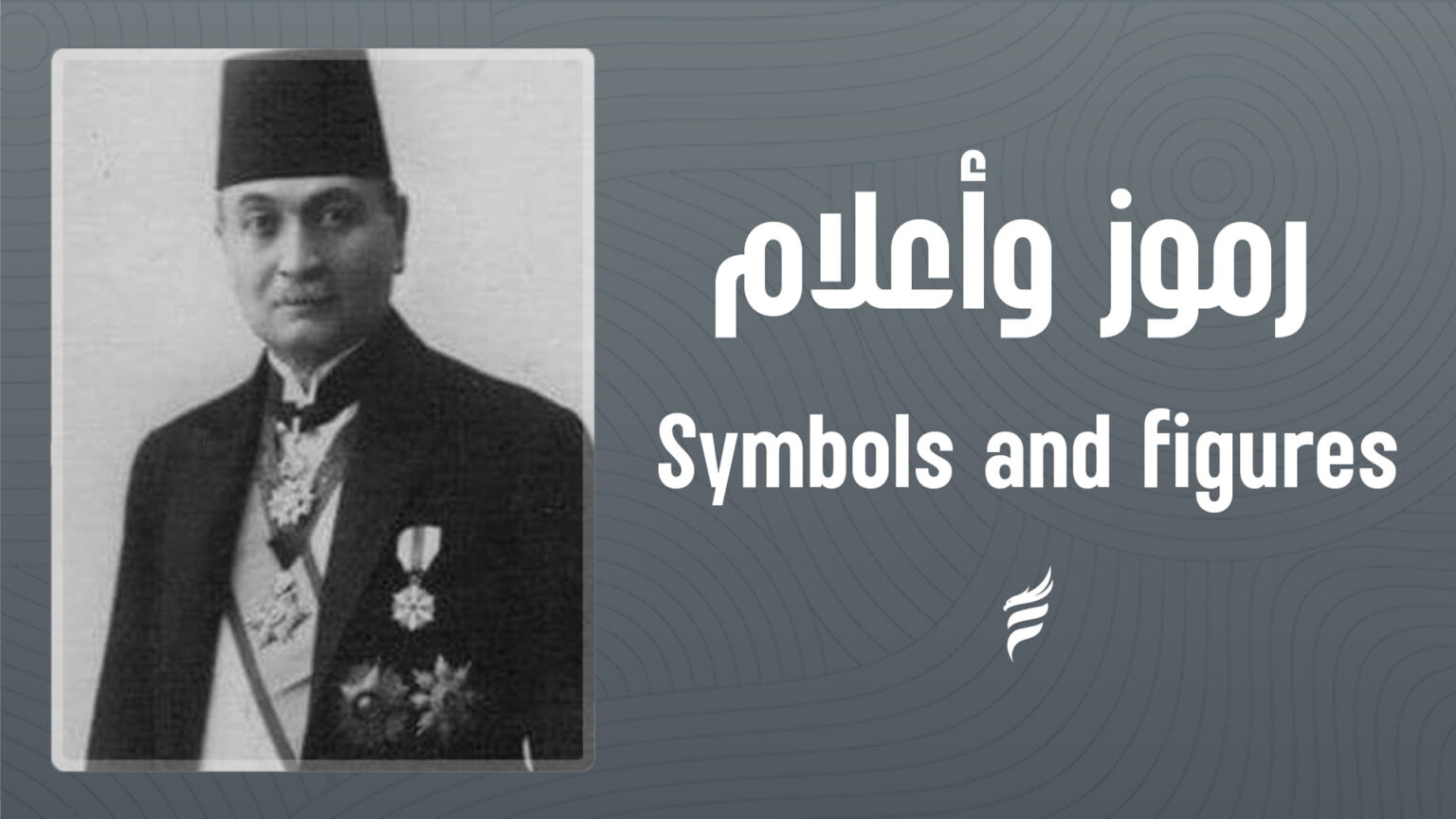
Haqqi al-Azm is one of the most prominent politicians in modern Syrian history and one of the early founders of the Syrian state during the French Mandate. He was born in Damascus in 1864 and received his education at the Lazarist Fathers School, where he mastered Arabic, Turkish, and French, before beginning his career at the Imperial Office in Damascus.
Early life and career before the Mandate:
Haqqi al-Azm moved to Istanbul, where he held positions in the Real Estate and Customs Departments, and was then appointed Minister of Education in Egypt. In 1909, he served as Inspector General of the Ottoman Ministry of Endowments after the deposition of Sultan Abdul Hamid II, as a member of the Committee of Union and Progress.
However, the Turkification policies pursued by the Committee led him to resign and return to Egypt in 1911, where he founded the Reform Party and the Decentralization Society.
National Positions During World War I:
The military court established by Jamal Pasha the Butcher sentenced him to death for his public call for administrative decentralization in the Levant, but his presence in Egypt prevented the sentence from being carried out.
Headquarters of the State of Damascus:
In September 1920, General Henri Gouraud declared the establishment of the State of Damascus. Following Jamil al-Ash’i’s resignation in November of the same year, Haqqi al-Azm assumed the presidency and government.
The borders of the state included Damascus and its districts, with the exception of areas annexed to Lebanon, Jordan, or the Jabal al-Alawite State. Although al-Azm was president, actual power remained with the French representative.
Al-Azm worked to reduce expenditures and improve administrative efficiency. He enacted reforms that included hierarchizing official hierarchies, establishing the Presidency of Scholars, establishing a body to monitor endowment funds, and regulating the paid labor of prisoners.
The Assassination Attempt of General Gouraud:
In June 1921, during Gouraud’s visit to the Golan Heights accompanied by Haqqi al-Azm, the convoy was attacked by armed men led by Adham Khanjar. Al-Azm was shot several times while protecting Gouraud, strengthening his standing with the French.
Demonstrations and Political Opposition:
The decisions to partition the country and separate Suwayda from Damascus sparked a wave of demonstrations between 1921 and 1922. The government responded with arrests and exile before issuing a general amnesty. In 1922, a federation between Damascus, Aleppo, and Latakia was declared, and Al-Azm retained the presidency of the Damascus region until January 1925.
Return to Parliament and Ascension to the Prime Ministership:
Haqqi Al-Azm was elected as a representative for Damascus in 1932 and headed the Southern Parliamentary Bloc. In June of the same year, he was appointed prime minister after Muhammad Ali al-Abid was elected president of the republic.
His government succeeded in reducing expenditures and privatizing some public services, but it collapsed in 1933 due to disagreements over the Treaty of Peace and Friendship with France. Al-Azm returned to form a second government that included moderates and independents. It succeeded in reducing the state’s debt from 70 million Turkish liras to 24 million, but it remained politically weak.
End of Political Career:
Al-Azm’s second government resigned in May 1934, after which he assumed the presidency of the Shura Council until his retirement in 1938.
He moved to Cairo to manage his family’s estate, remaining there until his death in 1955, where he was buried.
Lessons Learned from His Experience:
Haqqi al-Azm’s experience provides a clear picture of the complexities of governance under the Mandate, the difficult balance between administrative and political work, and dealing with an imposed foreign authority.
We, in the Syrian Future Movement, believe that studying his biography, including its successes and failures, helps us understand the path of building the Syrian state and inspires us to continue working to establish a modern, independent state capable of protecting the interests of its people.