
Executive Summary:
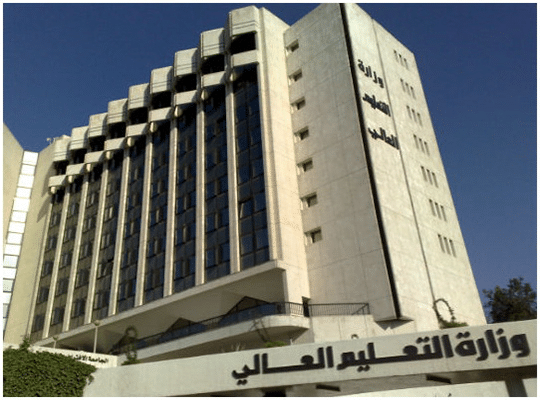
The Syrian Ministry of Higher Education and Scientific Research announced the launch of the first unified centralized university admissions system, including public and private universities, starting with the new academic year.
This step comes within the context of reform efforts aimed at enhancing transparency, standardizing standards, and reducing administrative burdens on students.
The Structural Context of University Admissions in Syria:
University admissions in Syria have traditionally been a multi-track process, distributed between public and private universities. It is often characterized by ambiguity, disparities in standards, and informal interference that impacts the fair distribution of educational opportunities.
During the years of the revolution, these problems have worsened, as trust in educational institutions has declined and the gap between the center and the periphery, and between formal and informal education, has deepened.
In this context, the new initiative to transform admissions into a unified centralized system represents a structural shift in the university admissions mechanism, intended to reshape the relationship between students and educational institutions based on transparency and fairness.
Analyzing the initiative from an educational governance perspective:
- Procedural justice:
Unifying the admissions process through a centralized electronic platform is a step toward achieving procedural justice, as all students are given an equal opportunity to apply according to predetermined and announced criteria.
This shift reduces the potential for manipulation and limits the influence of favoritism and nepotism, which have long plagued admissions processes at some private universities. - Institutional transparency:
The electronic platform allows for tracking applications, ranking preferences, and public access to admission results, enhancing the transparency of the process and restoring some of the lost trust in higher education institutions. - Integration between the public and private sectors:
By integrating private universities into the centralized admissions process, the Ministry is recalibrating the relationship between the two sectors and reducing the regulatory chaos that had allowed some private institutions to circumvent academic standards.
Structural and Functional Challenges:
Despite the apparent positives, the initiative faces fundamental challenges that could hinder the achievement of its goals:
- The digital divide: Given the significant disparity in digital infrastructure between cities and rural or disaster-stricken areas, there is concern that a large number of students will be deprived of effective access to the platform, reproducing marginalization through technical means.
- Lack of Independent Oversight: To date, the Ministry has not announced the existence of an independent oversight body to oversee the selection process. This raises concerns about the possibility of manipulation or bias within the system itself, especially in the absence of strong oversight institutions.
- Weak Community Participation: To date, there has been no recorded active involvement of students or civil society in designing the platform or setting selection criteria. This weakens the initiative’s legitimacy and turns it into a top-down, non-participatory process.
Comparative Approach – Lessons from International Experiences:
1- Turkey – The ÖSYM Model
Turkey adopts a strictly centralized system for university admissions through the ÖSYM institution, which organizes the YKS exam and oversees student allocation. This model is relatively successful in achieving fairness, but it is sometimes criticized for its rigidity and lack of consideration for students’ interests.
2- France – Parcoursup Platform
France offers a more flexible model through the Parcoursup platform, which allows students to submit multiple preferences and takes into account academic performance and personal interests. The platform also provides psychological and advisory support, enhancing the student experience.
3- Egypt – Coordination Office
In Egypt, students are assigned solely based on high school grades, resulting in a centralized but non-interactive system that has been criticized for not taking into account individual skills or modern specializations.
From these experiences, lessons can be learned for Syria:
- Digitalization must be accompanied by independent oversight and community engagement.
- Fairness is not achieved solely through grades, but rather through a comprehensive assessment of the student.
- Technical and psychological support are essential to the success of any centralized platform.
The Political and Social Dimension of the Initiative:
This step cannot be separated from the broader political and social context in Syria.
The unified admissions process is not merely a technical measure; it is an attempt to rebuild trust in official institutions and unify standards in a country suffering from severe divisions in its educational and administrative structures.
From this perspective, the initiative can be viewed as part of a broader project to reform the public sector, promote social justice, and equal opportunities between urban and rural areas, and between groups affected by the conflict and those who have maintained their privileges.
Recommendations:
- Establish an Independent Oversight Body:
An independent national committee should be established to oversee the admissions process and issue periodic reports that are made public to ensure integrity and transparency. - Involve Civil Society and Students:
Representatives of students, academics, and civil society organizations should be involved in designing the platform and determining admission criteria to ensure inclusiveness and legitimacy. - Support for Disadvantaged Areas:
Technical support centers should be established in rural and marginalized areas to ensure all students have access to the platform and provide them with guidance. Developing Multiple Evaluation Criteria - Relying on high school GPA alone should not be limited to the assessment criteria. Personal skills, volunteer activities, and academic inclinations should also be taken into account to ensure a more equitable distribution.
Conclusion:
The unified central university admissions system in Syria represents a promising step toward reengineering educational justice. However, it is still in its infancy and requires institutional, regulatory, and societal safeguards to prevent it from becoming a digital facade that reproduces exclusion through new means.