
Introduction:
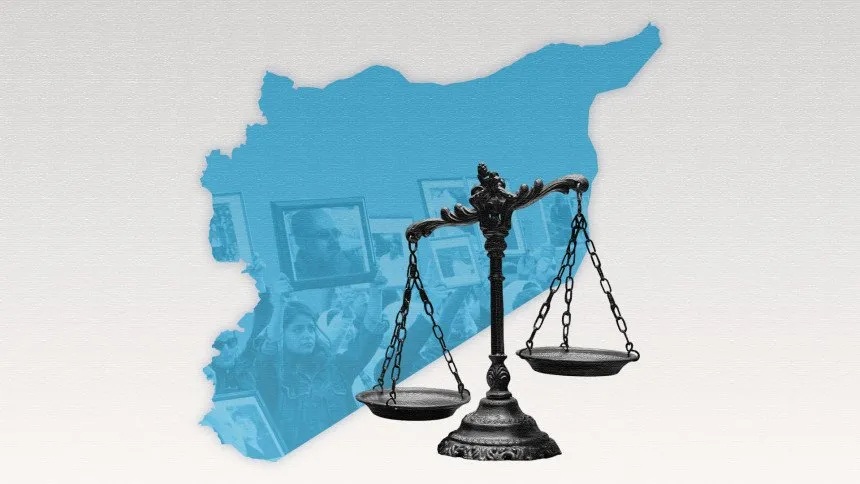
In the context of the profound political transformations taking place in Syria after the fall of the tyrannical regime in December 2024, the Constitutional Declaration issued by President Ahmad al-Sharaa in March 2025 has emerged as a focal point of political debate about the possibility of building a genuine consensus process.
Here, the Carnegie Endowment for International Peace report, titled “Is There Another Chance for a Consensus Process in Syria?”, raises fundamental questions about whether this declaration represents a step toward consensual democracy or risks reproducing previous forms of tyranny.
This article aims to analyze this opportunity, drawing on the social contract theories of Jean-Jacques Rousseau and John Rawls, with a focus on the concepts of transitional justice and consensus in post-conflict societies.
From a political philosophical perspective, consensus represents the process of building a new social contract that transcends the sectarian and ethnic divisions inherited from the Syrian war, which has lasted for more than 14 years and claimed the lives of millions of Syrians.
In “The Social Contract,” Rousseau asserts that true sovereignty lies in the general will, which can only be achieved through the participation of all parties in formulating laws. In the Syrian context, this concept is further complicated by social fragmentation. Syrian society is “deeply divided, distrustful, and traumatized by past experiences.”
This division is evident in Syrians’ fear of repeating past mistakes, while emphasizing that reconciliation requires overcoming sectarian concerns.
Theoretical Framework: Transitional Justice and Consensus in Political Philosophy:
Transitional justice is a central concept in modern political philosophy, particularly in John Rawls’s work in “A Theory of Justice,” where he proposes a “veil of ignorance” as a mechanism to ensure a just social distribution without preconceived biases.
In the Syrian context, the Constitutional Declaration can be interpreted as an attempt to establish such a veil by regulating governance during the transitional period and guaranteeing basic rights such as security and justice.
According to the aforementioned report, the declaration aims to “regulate the affairs of governance,” but it was drafted in secret by a small committee, raising questions about its consensual legitimacy.
The report compares the experiences of Syria and South Africa, where the South African Constitutional Court (1994-1996) succeeded in building consensus through pre-agreed general principles, such as equality and fundamental rights. This model reflects Hegel’s philosophy of “right,” which views the state as the realization of reason in history by reconciling competing interests.
In Syria, the legitimate president can use his authority to appoint diverse judges to the Constitutional Court, opening the door to a consensus process that includes all Syrian factions, including minorities and displaced persons.
However, the report warns of the dangers of the concentration of power in the hands of the president, who appoints judges and influences the legislative process, which could lead to a “new form of dictatorship.”
Reconstruction also appears to emphasize three key requirements: regional consensus, international support, and social inclusion. This implies that consensus requires overcoming the demographic and economic divisions resulting from the war.
Which brings us to the conclusion that consensus is not merely a legal procedure, but rather a psychological and social process that requires building trust, as Nietzsche describes in “Thus Spoke Zarathustra” as the will to power as an overcoming of historical weakness.
Syrian Challenges: Between Tyranny and Consensus:
In the Syrian context, consensus faces profound philosophical challenges, stemming from the legacy of authoritarianism that has prevailed for decades.
The Constitutional Declaration, despite its declaration of rights and freedoms, grants the president broad powers, reminiscent of Plato’s warning in “The Republic” (c. 380 BC) that democracy will turn into tyranny if it is not built on moral virtues.
Compared to Egypt after 2011, where the Constitutional Court led to deep divisions between Islamists and secularists, it seems necessary to be cautious about repeating this scenario in Syria, where the court may be viewed as a tool of exclusion.
In the debate over Western policy toward Syria, the need for a comprehensive political agreement to end the conflict is highlighted, while cautioning against the failure of tactical measures without consensus. Furthermore, focusing on the peripheral regions is essential to understanding the future path, meaning that consensus requires regional support to overcome external interventions.
These discussions reflect Kant’s philosophy of “perpetual peace,” which holds that peace requires an international federation, which can be implemented in Syria through the lifting of sanctions and international reintegration as an incentive for reconciliation.
In addition, there is the issue of sectarianism as a major obstacle; in a study of sectarian fragmentation, formerly loyal factions appear to be obsessed with the loss of control, requiring psychological mechanisms to build trust.
From a philosophical perspective, this recalls Foucault’s Discipline and Punish, where he views tyranny as a network of power that permeates society, and dismantling it requires a process of consensus that includes accountability and reconciliation.
Future Prospects:
To achieve another opportunity for consensus in Syria, some propose the formation of a diverse constitutional court and agreement on general principles, inspired by the South African model.
This reflects Habermas’s theory of “communicative action,” where consensus is built on rational dialogue that transcends personal interests. In the Syrian context, this dialogue must include displaced persons and minorities, with international support for lifting sanctions. Demographic changes also require regional consensus.
The issue of Arab normalization with the former regime is highlighted as a factor hindering consensus, urging caution that pro-Assad bias prevents a comprehensive settlement.
Furthermore, a study of the Syrian crisis emphasizes the weakness of national belonging as a major challenge, requiring the construction of a shared identity philosophically inspired by Aristotle’s “Politics,” where the city is a community for the good life.
Conclusion:
In conclusion, the Constitutional Declaration in Syria offers a philosophical and political opportunity for a consensus process, but it requires overcoming the risks of tyranny through an independent constitutional court and inclusive dialogue.
This analysis confirms that consensus means, most importantly, rebuilding the social contract on the foundations of justice and trust.
With international and regional support, Syria can become a model of transitional justice for achieving lasting peace.
References:
- Aristotle (2006). Politics. Translated by Ahmed Lutfi al-Sayyid. Cairo: Dar al-Maaref.
- Foucault, M. (2004). Discipline and Punish: The Birth of the Prison. Translated by Ali Samih. Beirut: Dar al-Tali’ah.
- Habermas, Y. (2006). The Theory of Communicative Action (Volume 1). Translated by Muhammad al-Hajj Salem. Beirut: Arab Foundation for Studies and Publishing.
- Hegel, J. F. (1999). The Philosophy of Right. Translated by Imam Abdel Fattah. Beirut: Dar al-Kitab al-Arabi.
- Kant, E. (2002). Towards Permanent Peace. Translated by Fouad Zakaria. Cairo: Dar Al Tanweer.
- Nietzsche, F. (2008). Thus Spoke Zarathustra. Translated by Ali Misbah. Beirut: Dar Al Saqi.
- Plato. (2005). The Republic. Translated by Fouad Zakaria. Cairo: Dar Al Shorouk.
- Rawls, J. (2003). A Theory of Justice. Translated by Samir Makdisi. Beirut: Dar Al Ahlia.
- Rousseau, J. J. (2007). The Social Contract. Translated by Abdullah Abdul Rahman. Damascus: Dar Al Hasad.
- Carnegie for International Peace. (2025). Is There Another Chance for a Reconciliation Process in Syria? Syria TV. Available at: https://www.syria.tv/كارنيغي-هل-ثمة-فرصة-آخر-لعملية-تضامنية-في-سورية؟