
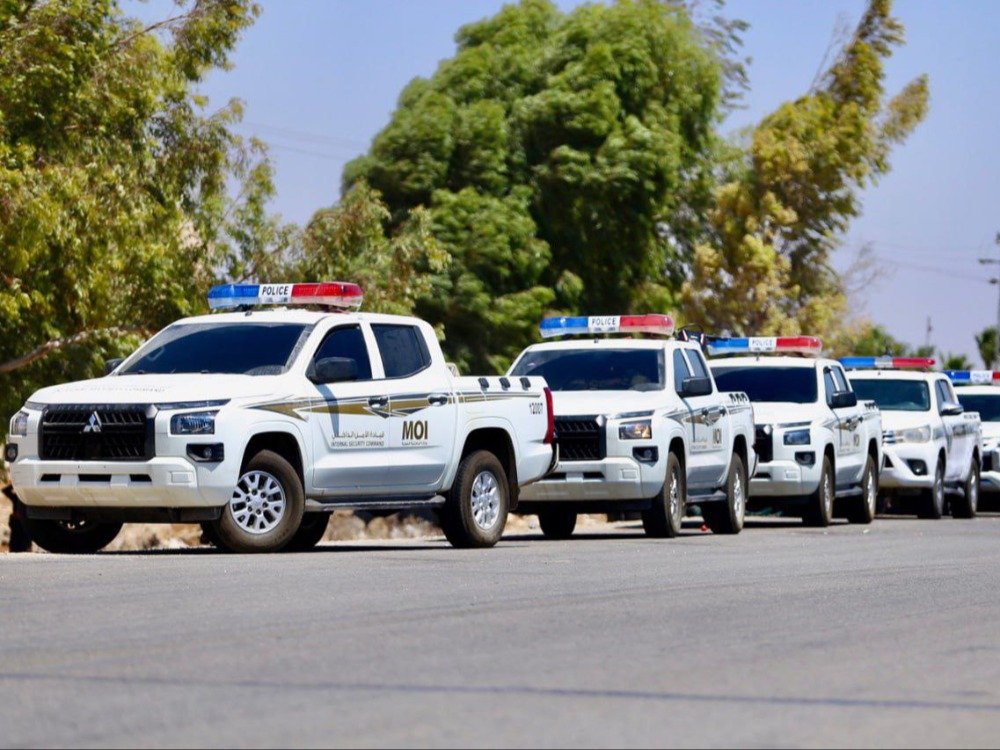
On August 6, 2025, the Internal Security Command in Hama Governorate, through Brigadier General Mulham Mahmoud Al-Shantoot, announced the opening of a disciplinary investigation into security personnel who committed individual violations during their intervention to resolve an armed conflict in the Al-Dahriya neighborhood. The patrol in question was suspended and referred for investigation, a rare step with profound political and moral implications.
We in the Syrian Future Movement are following this development with great interest and express our appreciation for this initiative, which represents a departure from the pattern of institutional denial and opens a window toward long-awaited internal accountability.
Accountability is an implicit declaration that the state is still capable of self-examination, admitting its mistakes, and returning to the logic of the law.
The Syrian Future Movement calls for transforming this step from an exceptional case into a general policy, implemented across Syria, from Hama to Hasakah, from Daraa to Idlib. Accountability cannot be fragmented or exercised selectively; rather, it must be a foundational principle of the state’s relationship with its citizens, especially in the post-conflict phase, when trust is being rebuilt from the rubble. The Syrian Future Movement considers the state not merely an executive authority, but rather a moral contract between the citizen and the institution. When the state holds its elements accountable, it does not weaken itself, but rather strengthens its legitimacy. Unchecked power turns into violence, and uncondemned violence turns into a culture. A culture that legitimizes humiliation produces a fragile society that cannot stabilize or advance.
The Syrian Future Movement sees this step as an opportunity to build a new social contract, based on a transition from a logic of fear to a logic of trust, and from a culture of impunity to a culture of accountability.
This can only be achieved through:
- Activating independent civilian oversight mechanisms.
- Documenting security missions with body cameras, as proposed by the Ministry of Interior.
- Assigning an identification number to each security personnel to facilitate reporting and accountability.
- Involving the local community in evaluating the performance of security institutions.
The Syrian Future Movement, with its vision of building a just civil state, considers this step the first step in a long process toward reforming the security sector and redefining the relationship between the government and society.
Emphasizing that accountability is not a threat to stability, but rather a condition for it, and that justice is not a burden on the state, but rather the foundation of its existence.