
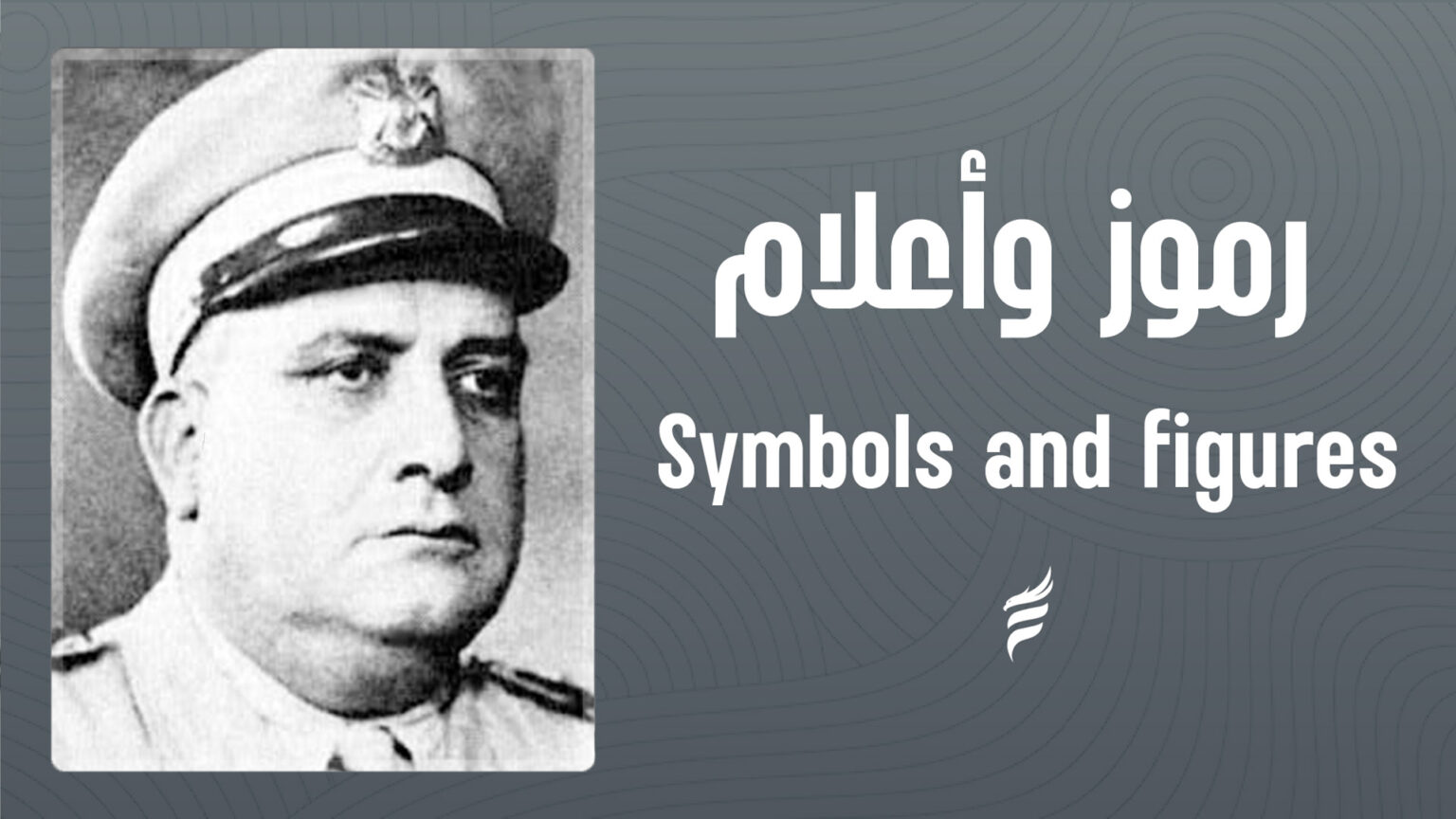
As part of the series on state symbols and flags in Syria, published by the Syrian Future Movement on its official website, we highlight one of the most prominent nationalist officers who contributed to shaping the features of the modern Syrian state after independence: Colonel Sami al-Hinnawi, leader of the second coup in Syria’s history and founder of the national
project for Syrian-Iraqi unity. From Aleppo to the Battlefields:
- Sami al-Hinnawi was born in Aleppo in 1898.
- He graduated from the Dar al-Mu’allimin School in Damascus in 1916, then joined the military school in Istanbul.
- He returned to Damascus and joined the Military Academy in 1918, graduating with the rank of Second Lieutenant.
- He participated in the battles of the Caucasus and Palestine during World War I as part of the Ottoman Army.
Military and Political Career:
- He served in the Sanjak of the Alexandretta Sanjak within the gendarmerie forces, then transferred to the “Army of the East” under the French Mandate.
- After independence, he joined the Syrian National Army and participated in the 1948 Palestine War, where he was promoted to the rank of Colonel.
- He was appointed Chief of Staff of the Syrian Army from August 14 to December 19, 1949.
Coup and National Mission:
- On August 14, 1949, he led the second military coup in Syria, in collaboration with Asaad Talas, against President Husni al-Zaim and his Prime Minister Muhsin al-Barazi. They were executed after a swift military trial.
- Al-Hinnawi assumed the presidency of the Syrian Interim State for only two days before handing over power to President Hashim al-Atassi, declaring the end of his national mission.
A Man of Unity and Moderation:
- He was close to the People’s Party and supported the Syrian-Iraqi unity project, which angered Colonel Adib al-Shishakli, who overthrew him in a third coup on December 19, 1949.
- His name was associated with the Syrian Social Nationalist Party, but he was not a party activist in the traditional sense.
- He was known for his high morals and his distance from authoritarian ambitions. He was viewed more as a reformist officer than a man of authority.
A Tragic End:
- After the Shishakli coup, al-Hinnawi was arrested and imprisoned in Mezzeh Prison. He was released in September 1950.
- He secretly left Syria for Beirut, where he met Asaad Talas and began to sense his impending death.
- On October 30, 1950, he was assassinated on a Beirut street by Harsho al-Barazi, in revenge for the killing of al-Atassi’s son. His uncle, Mohsen al-Barazi.
- His body was transported to Aleppo and buried in the Hanano Cemetery with a solemn public funeral.
As we, in the Syrian Future Movement, commemorate the life of Syrian Interim President Sami al-Hinnawi, we emphasize the importance of drawing inspiration from honest national experiences in building a modern Syrian state based on justice and inclusive citizenship.
We remember these figures not as tales from the past, but as inspiring models for shaping the future. We benefit from their positives, overcome their negatives, and learn from their paths. Thus, the new Syrian republic is built not on loyalty and subservience, but on the foundations of a mature civil state that respects sacrifices and preserves sovereignty.