
introduction:
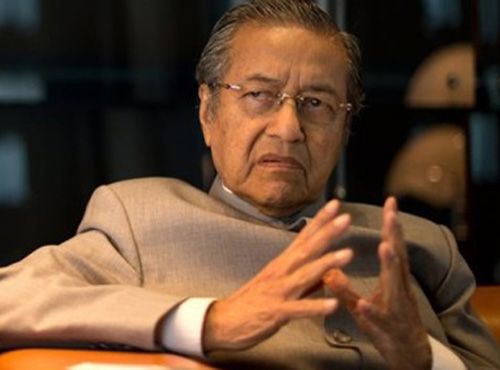
The Malaysian experience between 1981 and 2003, under the leadership of Dr. Mahathir Mohamad, is a model of the state’s success in reshaping its national identity, establishing its economic structure, and achieving institutional stability within an ethnically and religiously diverse society. Mahathir’s “Malaysia Vision 2020” policy represented a conceptual shift in understanding the state’s developmental function, linking effective political leadership, institutional reform, and directed productive modernization.
Prior to this transformation, Malaysia suffered from the manifestations of a fragmented state, as defined by Fukuyama: weak monopoly of legitimate authority, imbalanced resource distribution, and divisions among societal components.
However, Mahathir overcame this reality through a complex leadership model that combined economic developmentalism, civic inclusion policies, and the mobilization of national will around a comprehensive future project. These structural divisions are strikingly similar to the current Syrian situation, where the state suffers from institutional fragility, societal fragmentation, and a lack of consensus on a comprehensive national formula. While caution must be taken against mechanically copying models, the development philosophy adopted by Malaysia offers an analytical framework that can be adapted to Syria, particularly in the areas of institution-building, redefining a unifying political identity, and transforming division into productive diversity within a pluralistic national identity.
This article draws on a comparative political philosophy approach to analyze the Malaysian transformation experience, focusing on the essential policies that made a difference, such as strategic planning, economic governance, and effective public administration. It connects to the Syrian context by offering methodological proposals, based on the vision of the Syrian Future Movement, to establish a sustainable reform path based on lessons learned from the Mahathir School and Asian development models characterized by institutional stability.
“If you want to build a great nation, start by building the people who believe in it.” – Mahathir Mohamad (Mahathir, 1995)
The historical and political background of Malaysia before Mahathir Mohamad: a pluralistic state with structural fragility and cumulative challenges:
Before Mahathir Mohamad came to power in 1981, Malaysia was a country beset by structural challenges, combining ethnic, religious, and regional diversity, deep economic divisions, and an unresolved political identity conflict. At that time, Malaysia could be considered a classic example of a developing country emerging from colonialism but still unable to build a comprehensive national project.
Colonial legacy and institutional dysfunctions:
Since its independence from Britain in 1957, Malaysia has inherited a fragile administrative system based on colonial bureaucracy, devoid of a cohesive social base. Government structures were primarily geared to serving British economic interests and were not built to accommodate the country’s diverse ethnic background, with Malays constituting approximately 50% of the population, Chinese 30%, and Indians 10%, in addition to other local minorities. The Chinese, who controlled the levers of the economy in the major cities, became, in the eyes of many Malays, an economically dominant class that did not represent the country’s authentic identity. This created structural tensions reflected in employment policies, education, and business activity.
Ethnic violence events, the shock of 1969:
One of the most influential moments was the May 1969 race riots, which erupted after the general election and resulted in hundreds of deaths (not officially confirmed), when Malays protested against Chinese dominance in parliament and the economy. A state of emergency was declared, the constitution was temporarily suspended, and the government formed a new unit called the National Operations Council to manage the crisis, radically reshaping the political system. These events demonstrated that Malaysia was unable to manage ethnic diversity without escalation, and that the idea of a nation-state was in a deep crisis of legitimacy.
Failure of distributive economic growth:
Despite fluctuating growth rates in the 1960s and 1970s, the gap between the Malay-majority countryside and the Chinese-dominated cities was widening. This led to growing demands for affirmative action policies in favor of Malays, manifested in the so-called New Economic Policy (NEP), which began to be implemented in 1971 under the leadership of Abdul Razak Hussein. The NEP aimed to:
- Eradicating poverty, regardless of ethnicity.
- Restructuring society so that race is not linked to economic function.
However, although these policies partially alleviated the disparities, they created a climate of interethnic mistrust, which subsequently constituted a permanent pressure point on the political system. The Crisis of Leadership and Legitimacy Before 1981:
By the end of the 1970s, the ruling elite lacked a leader capable of bridging divisions, and the authoritarian-functional model was unable to mobilize productive social energy. The country also suffered from accumulated administrative corruption, a decline in the efficiency of public institutions, and a clear absence of a comprehensive development vision, at a time when neighboring Asian countries (such as South Korea and Singapore) were embarking on strong modernization paths
When compared to Syria, we notice similarities in some structural dilemmas, including:
- Societal pluralism, the diversity of which has not been managed within a unifying national identity.
- Weak political legitimacy linked to the lack of national consensus, especially given the presence of sectarian and ethnic divisions.
- Regional economic accumulations due to the policies of the former regime deepen disparities and thwart development efforts.
- Institutional inability to leverage cultural and historical heritage to build a productive, participatory economy.
Hence, understanding the Malaysian background before Mahathir becomes an essential entry point for any attempt to implement a development approach in Syria, particularly in light of the need to move beyond narratives based on belonging toward a productive-institutional project that reaffirms the concept of the state as a platform for justice and diversity.
Towards building a developmental state with a vision:
In the context of the Malaysian experience, the transformation led by Mahathir Mohamad was not merely a temporary economic project. Rather, it represented a reversal of the post-colonial state model, which often suffers from institutional chaos, external dependency, and a failure to generate sovereignty from within society. Despite his non-elite background—as a physician and then Minister of Education and Health—Mahathir possessed an exceptional ability to link the philosophy of governance with the redesign of markets, administration, and identity.
In contrast to the revolutionary model that sought to overthrow previous regimes, Mahathir adopted cumulative reform, building on existing ones while reorienting them functionally. He did not abolish institutions inherited from colonialism, but rather emptied them of their elitist content and re-instated them with a productive national function. It can be said that Mahathir represented the model of the “techno-political ruler,” treating state institutions as platforms for implementation rather than instruments of domination. He leveraged Japanese computing and management technologies and integrated them into the construction of an effective public administration.
One of the most notable manifestations of Mahathir’s leadership prowess was his approach to crisis management. In the late 1990s, when the financial crisis struck Asia, Mahathir rejected IMF recommendations to float the Malaysian currency, instead imposing capital controls and keeping the ringgit exchange rate stable.
Nobel Prize-winning economist Joseph Stiglitz admired this approach, stating, “Malaysia was one of the few countries that successfully defied international financial institutions without collapsing.”
This action increased Mahathir’s domestic legitimacy, as Malaysians saw him as a leader who protected the country’s economy and was not subject to external pressure.
Mahathir confronted the ruling UMNO party establishment with internal reform, not political fragmentation. He restructured the executive office, imposed restrictions on quotas, and required ministers to submit interim plans for each ministry based on performance indicators. His opponents accused him of authoritarianism, but he redefined the concept of “competence” as a source of legitimacy, rather than party or tribal affiliation. Mahathir’s experience in reforming “political leadership from within” serves as a model for Arab countries where the ruling party suffers from stagnation and inertia. Mahathir “did not fight institutions, but rather changed their logic.”
In his 1995 speech to the Malaysian Parliament, Mahathir emphasized that “justice is not just distribution, but rather enabling citizens to access resources through merit,” reflecting his unique blend of moral and political content.
Thinkers have cited this statement to describe the difference between capitalist development and national development.
In this context, Mahathir redefined the relationship between the citizen and the state: the citizen was no longer a recipient of handouts, but a partner in building the state. Institutions such as the Ministry of Education and the Ministry of Planning became social responsibilities, not mere implementation agencies.
Based on the above, Syria can structure some of these principles into actionable steps:
- Establish a sovereign planning body that produces development policies based on indicators, not loyalties.
- Reject policies dictated by international financial institutions without an internal institutional alternative, while embracing Asian expertise.
- Reformulate the relationship between public administration and citizens by holding institutions responsible for capacity building, not for containing individuals.
- Develop a government policy based on “merit versus empowerment,” as an alternative to rentier or clientelistic approaches.
The Syrian-Malaysian Openness and the Potential for Institutional Cooperation: From Studying the Model to Building a Multidimensional Development Partnership
After analyzing the Malaysian development transformation experience under Mahathir Mohamad, the importance of transforming this study from a mere intellectual assessment into a practical cooperation project between Syria and Malaysia is highlighted. Although the geographical and political distance between the two countries may appear vast, the similar challenges—particularly those related to rebuilding the state after the division, reviving the productive economy, and formulating a unified national identity—represent a focal point for a long-term strategic approach between the two parties.
Perhaps the justifications for Syrian-Malaysian cooperation are evident in:
- The societal experience is similar. Malaysia has experienced sharp ethnic divisions between Malays, Chinese, and Indians, and Syria faces similar sectarian and regional challenges. This makes Malaysia’s pluralistic governance a model for Syria to consider.
- An identity-driven development approach: Malaysia has not only succeeded economically, but also in building a “comprehensive development identity” through comprehensive education and media policies, something Syria desperately needs to rebuild after years of war.
- Opening up to Asian Islamic countries: Malaysia, as an active member of the Organization of Islamic Cooperation, can serve as a bridge between Syria and economically emerging countries such as Indonesia and Bangladesh, away from traditional geopolitical polarization.
The areas of practical cooperation are:
- Reforming public administration and building institutional capacity, through the implementation of a joint training program between the Syrian Ministry of Administrative Development and the Malaysian Institute of Public Administration (INTAN), focusing on digital transformation, combating corruption, and improving service quality. This program also includes adopting the Malaysian Economic Planning Unit (EPU) model as a model for establishing an independent Syrian body for integrated policies.
- Technical and vocational education, through expanding partnerships between Syrian universities and Malaysian institutions such as the University of Technology Malaysia (UTM) and the International Islamic University of Science and Technology (IIUM), particularly in the fields of engineering, governance, and social studies. This program also includes establishing the Syrian-Malaysian Institute for Applied Development to train youth in technical skills and labor market behavior.
- The Syrian-Malaysian Free Zone, through the establishment of a joint free industrial zone on the Syrian coast, will attract Malaysian capital in the fields of food industries, electronics, and textiles. This program also includes adopting incentive tax legislation inspired by the experience of the Penang Free Zone.
- Smart agriculture and food security, through the development of cooperative projects between the two ministries of agriculture aimed at introducing Malaysian agricultural technologies based on sustainability and digital control, while supporting joint export lines to Southeast Asia.There is a great need for institutional efforts to strengthen cooperation through the signing of a strategic memorandum of understanding between the Syrian Ministry of Economy and the Malaysian Ministry of International Trade, which includes a ten-year roadmap .The formation of a joint Syrian-Malaysian cooperation council consisting of government officials, businessmen, academics, and development experts, which will submit annual recommendations to the two leaderships .In addition to adopting an expertise exchange program, this includes sending Syrian delegations to Malaysia to learn about Mahathir’s experience in development, integration, and institutional reform.
The Malaysian model demonstrates that the success of any country emerging from crisis depends on its ability to adopt an institutionalized development vision that integrates the technical and political dimensions, and identity and economics. If Syria can build a strategic partnership with Malaysia based not on imports, but on empowerment, exchange, and methodological expertise, this will constitute a realistic entry point for Syria’s 2040 development vision.
Towards a Syrian vision inspired by the Malaysian experience for rebuilding the state, institutions, and society:
After reviewing the historic transformation led by Malaysia under Mahathir Mohamad, and the developmental and institutional outcomes achieved, the discussion of the possibility of adopting a reform approach in Syria takes on a practical dimension, especially after more than a decade of conflict and division.
The current phase also calls for a long-term national vision that goes beyond traditional administrative mechanisms and relies on a philosophy of developmental and societal transformation that redefines the role of the state and its institutions.
Accordingly, we, in the Research and Studies Department of the Political Bureau of the Syrian Future Movement, recommend the following:
First: Formulate a comprehensive national vision based on:
- Proposing the adoption of “Syria Vision 2040” as an official strategic document, developed through a national dialogue involving economic, administrative, and educational experts, and representatives of civil society, similar to “Malaysia Vision 2020,” which set specific indicators for development and integration.
- Develop this vision to include areas such as restructuring public institutions based on efficiency, modernizing and functionally localizing education, consolidating a unified Syrian identity within a culture of production and diversity, and achieving balanced spatial development between rural and urban areas.
Second: Reforming public administration and governance, which will be achieved through:
- Establish an independent body similar to the Malaysian Economic Planning Unit (EPU), reporting directly to the Prime Minister (currently the President), comprising experts in economics and public administration, to coordinate between ministries to implement the vision’s objectives.
- Adopt ministerial performance indicators and periodically monitor implementation through publicly available quarterly reports, as the Malaysian government has done since 1983.
- Introduce a culture of “smart governance” that combines digitization and transparency, such as Malaysia’s MyGov model, which facilitates citizens’ access to government services electronically.
Third: Investing in people and education through:
- Rebuilding the technical and vocational education system in Syria based on direct linkage to the labor market, drawing inspiration from the Malaysian model of technical universities and smart education zones.
- Establishing national universities specializing in development and public administration in cooperation with institutions such as the International Islamic University Malaysia (IIUM), which has contributed to producing cadres to manage the national transformation.
- Implementing the “Syrian Smart Schools” project in remote provinces, as Malaysia has done in Sabah and Sarawak, to integrate modern technologies into the official curriculum.
Fourth: Empowering the local economy and the private sector through:
- Adopting a “parallel development policy” that combines local incentives with foreign investment, and providing tax benefits to projects that employ Syrian workers and export their products.
- Establishing free industrial zones, such as the “Syrian-Malaysian Joint Zone,” to accommodate industrial and commercial investments, with a government-private partnership model, as in the Penang Free Zone.
- Establishing an “Economic Empowerment Authority for Affected Areas,” which focuses on supporting small local enterprises and restoring development balance between regions.
Fifth: Openness to Asian experiences and development alliances through:
- Expanding Syrian-Malaysian relations to include cooperation in governance, education, agriculture, and entrepreneurship, through framework agreements with the Malaysian Ministry of Planning.
- Launching the “Asia Vision for Syrian Development” platform, with the participation of Malaysian, Indonesian, and South Korean experts, with the aim of drawing inspiration from non-Western transformation models in state-building.
- Using the Malaysian experience in “rebuilding national confidence after the crisis” through cultural and media policies that promote a unified identity, as Malaysia did in its “National Unity 1998” campaign.
Building a new Syria cannot rely solely on physical reconstruction; rather, it requires reimagining the state itself as a rational, national productive structure. The Malaysian experience, with its failures and successes, offers lessons in transforming a structural impasse into a revival project, provided there is a vision, institutions, and a unifying political will.
We believe that cooperation with Malaysia is not a political luxury, but rather a realistic possibility for building a “reform bridge” between what Syria was and what it could be.
Conclusion: What next?
At the historical intersection between what Malaysia faced in the pre-Mahathir Mohamad era and what Syria faces today after a decade of division and conflict, a reform model emerges that is measured not only by the size of the economy, but also by the state’s ability to redefine itself and harness its societal energies to achieve stability and development.
The Malaysian transformation experience belongs not only to development literature, but to a school of thought-practice that balances political will, institutional investment, and societal diversity, and relies on the human being as the center of renaissance.
Malaysia has demonstrated that a country emerging from colonialism and ethnic divisions can, within two decades, establish a productive civic identity, accumulate human capital, and build a robust economy based on industry and knowledge.
This transformation was not spontaneous; rather, it was the product of a political leadership aware of the vision, a public administration that embraces indicators, and a society whose aspirations were redirected from sub-identities toward the national project. As for Syria, it possesses the elements of civilization, diversity, and human capacity that qualify it to undergo a similar transformation, provided the conditions for vision, institutionalization, and partnership are met.
It is not enough to import policies; it must reformulate its system to suit its environment and context, and design its own tools, as Malaysia did with the Economic Planning Unit, industrial zones, and educational partnerships.
The approach put forward in this article does not call for “copying Mahathir,” but rather for “understanding Mahathir’s school”: a school that views diversity as an opportunity, citizens as a pillar, and sovereignty as a goal achieved through economic independence, not abstract slogans. It is time for Syria to move from a discourse of crisis to a discourse of vision, from managing the present to planning for the future, and from isolation to a measured openness to global experiences that have proven their ability to transition from fragility to resilience.
What can be inspired by Mahathir Mohamad’s approach: It is not the state that builds the individual, but rather the conscious individual who re-establishes his state. In light of this vision, Syria faces an exceptional opportunity: not to be a copycat of past experiences, but rather to write its own story, as President Ahmad al-Sharaa has repeatedly stated, and to build its own renaissance from within, benefiting from global lessons, without losing its national compass.