
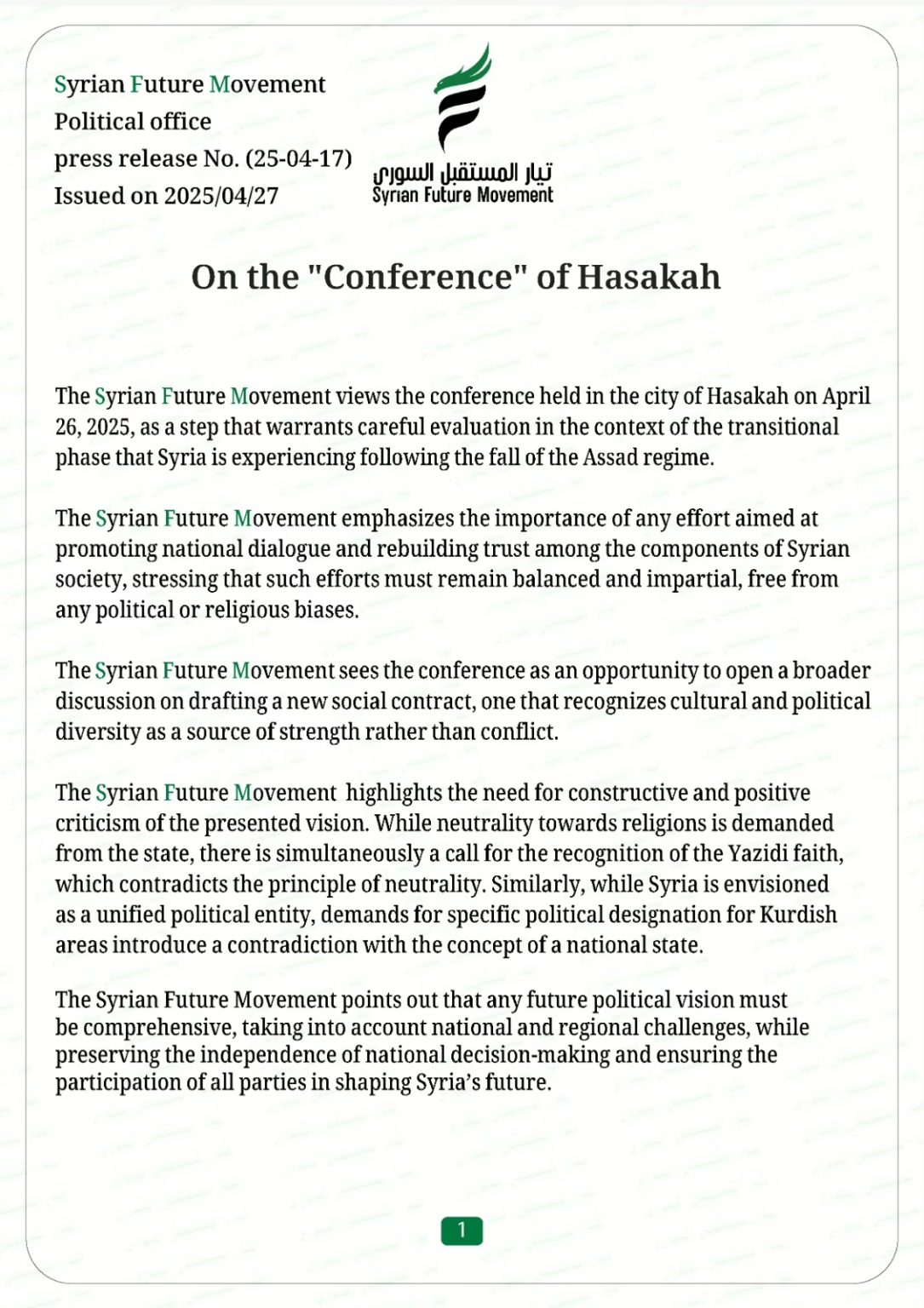
The Syrian Future Movement views the conference held in the city of Hasakah on April 26, 2025, as a step that warrants careful evaluation in the context of the transitional phase that Syria is experiencing following the fall of the Assad regime.
The Syrian Future Movement emphasizes the importance of any effort aimed at promoting national dialogue and rebuilding trust among the components of Syrian society, stressing that such efforts must remain balanced and impartial, free from any political or religious biases.
The Syrian Future Movement sees the conference as an opportunity to open a broader discussion on drafting a new social contract, one that recognizes cultural and political diversity as a source of strength rather than conflict.
The Syrian Future Movement highlights the need for constructive and positive criticism of the presented vision. While neutrality towards religions is demanded from the state, there is simultaneously a call for the recognition of the Yazidi faith, which contradicts the principle of neutrality. Similarly, while Syria is envisioned as a unified political entity, demands for specific political designation for Kurdish areas introduce a contradiction with the concept of a national state.
The Syrian Future Movement points out that any future political vision must be comprehensive, taking into account national and regional challenges, while preserving the independence of national decision-making and ensuring the participation of all parties in shaping Syria’s future.
The Syrian Future Movement regards the conference held in Hasakah as a significant development in Syrian political thought following the fall of Assad, reflecting a shift toward decentralization as a new political framework. This mirrors a desire to move beyond the centralized system that dominated the previous regime. In this context, we recall the proposal we published on our official website titled: “Centralization, Decentralization, and the Third Option Between Them,” where we favored the option of cooperative shared decentralization.
The Syrian Future Movement believes that the greatest challenge lies in balancing decentralization with national unity, especially in light of regional and international interventions that may influence the course of this project. Nevertheless, we generally view this step as a potential beginning of a profound transformation in the Syrian political landscape.