Did you know that China currently consumes 26% of the world’s energy (2022-2024)?
While the United States consumes only 18%!
China’s energy consumption has tripled in the past 23 years. This means that China has experienced tremendous growth in just over 30 years.
We must recognize that the greatest destroyers of the Earth’s atmosphere are the Chinese, and the fate of the planet is tied to improving China’s environmental behavior. Let’s not forget what they did to us with COVID-19 since 2020.
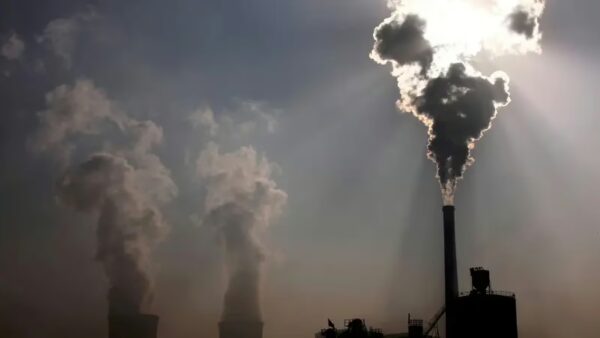
China uses fossil fuels, especially coal, to generate energy, and thus suffers from some of the worst types of pollution.
Chinese President Xi Jinping promised that China would be carbon neutral by 2060, unlike Germany, which promised 2050.
Who would believe that China’s output in 1990 was only 6% of America’s?
Who would believe that China’s energy consumption in 1990 was 34% of America’s!
China aims to be the world’s leading economy by the end of the third decade of the 21st century. Therefore, it has not committed to reducing carbon emissions until 2030.
But it has committed to achieving carbon neutrality 40 years from now.
What happened in the early 1990s was the privatization of industry, the reduction of government control over it, and the opening up of the global trade market.
Starting in 2001, China became the world’s factory, and within 20 years, it was able to catch up with the 120-year industrial revolution of the West.
China faced a problem in securing energy for factories and residential consumption, so it doubled its use of coal to generate the necessary energy, imitating what the West had done over the previous 100 years. Therefore, in my opinion, the industrial revolution and the material luxury of the West and China came at the expense of the environment of the planet we share!
Beijing was the most polluted city in the world for ten years.
In fact, China is leading the effort to find clean energy.
Since 2010, China has been mobilizing in the manufacture of solar panels and then wind projects, and has been able to significantly reduce the cost of manufacturing them, thus expanding its industry worldwide.
It has been able to produce energy from solar and wind, securing 10% of its energy needs by 2020.
China’s energy situation in 2020 is as follows:
60% Coal
16% Hydroelectric
8% Wind
5% Nuclear reactors
4% Solar energy
3% Gas
2% Bioenergy
Can Arabs and others have this broad spectrum of energy sources?
At the 2015 Paris Conference, China began serious official efforts to reduce carbon emissions, but stated that this would not happen before 2030.
China’s completed solar energy projects in Shanghai, western China, cover an area of 600 km². Do Arabs and Africans have any empty sunny areas?!
China plans to produce 1.2 terawatts of electricity from wind and solar by 2030, equivalent to America’s electricity needs today (2022). It controls 75% of the global solar energy supply chain.
A return to nuclear power seems to be encouraging now, given the scarcity of fossil fuels and the commitment to limit carbon emissions.
China plans to build 150 nuclear reactors in the next 15 years, more than the entire world has built in 35 years, despite the high construction costs. I previously suggested that Saudi Arabia and others should start building dozens of small nuclear reactors to meet the energy needs of their surrounding areas, but the response (to my proposal) seems muted so far.
In addition, the Chinese have the raw materials to manufacture polysilicon for solar panels and cobalt for batteries.
This is the reality around us, and the wise learn from others.
Dr. Saad Eddin Al-Bazra